Pattye Benson

Community Matters

Tredyffrin Township

Preserving History Matters: Watershed Moment for Tredyffrin Township, Chester County

With the recent demolition of the Ann Pugh Farm and as president of Tredyffrin Historic Preservation Trust, chair of the Annual Historic House Tour and owner of one of the oldest houses in the township, I feel a responsibility to speak out on the state of historic preservation in Tredyffrin Township .

After a review of the history of preservation in Tredyffrin and the demolition requirements, the following editorial was written and appears in this week’s Main Line Suburban newspaper and and online. As I say in the article, the people who purchased the 250-year old Ann Pugh house and then immediately demolished it did not break any laws. There were no ordinances in Tredyffrin Township to protect the 18th century house and there are no ordinances to protect the other 350+ historic properties in this community from a similar fate.

Pugh Road House

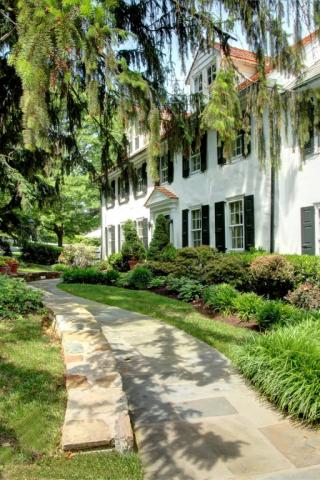
Pugh Road Farm House front

Preserving History Matters: Watershed Moment for Tredyffrin Township

Historic buildings play a special role in creating the distinctive character of each community. Historic preservation is about protecting, promoting, and using historic places. It is also about the power of place, places that matter because they help tell the story of our community, of who we are and where we come from. As suburban sprawl and roadside development make more and more places look the same, it becomes important for communities to keep their identities intact.

In January, we mourned the loss of the 18th century Ann Pugh house on Pugh Road in Wayne. The demolition of this beautifully restored historic treasure illustrates the plight of America’s old homes. Historic homes are on demolition lists all over America but many of us hoped that it would never happen in Tredyffrin. As president of Tredyffrin Historic Preservation Trust, whose mission is to “preserve and protect historic and cultural resources in Tredyffrin Township”, chair of the Annual Historic House Tour and owner of one of the oldest houses in the Township, I feel it is my duty to speak out.

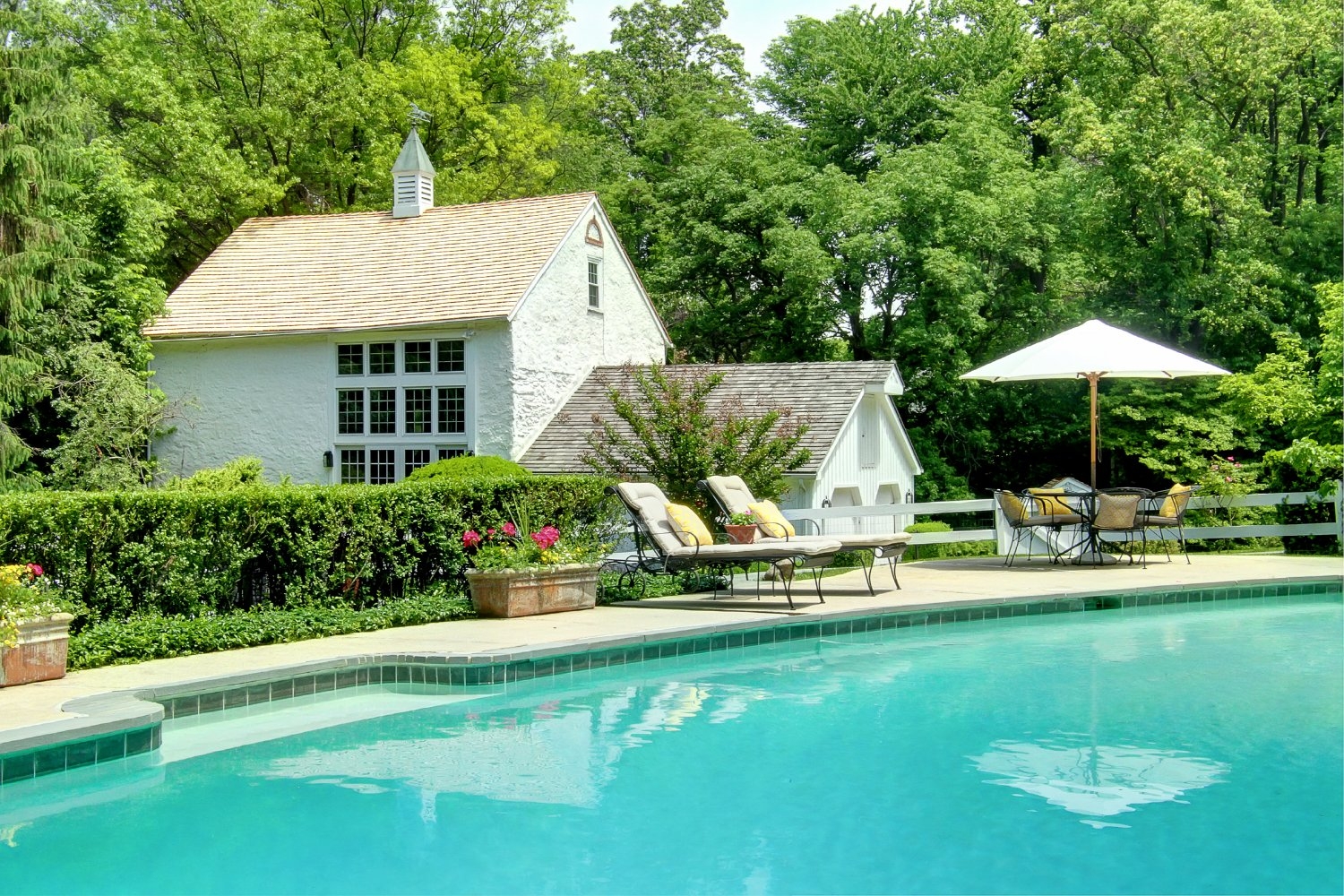
Typically, historic houses that have been badly neglected over the years, and are in such a state of disrepair that they are considered eyesores, are the ones targeted for demolition. However, the Ann Pugh house was neither neglected or in a state of disrepair. The stunning Georgian stone farmhouse on Pugh Road with its manicured landscaping and guest barn, springhouse and swimming pool had been meticulously restored and maintained. The real estate company described the Ann Pugh Farm as the “quintessential Pennsylvania farmhouse – a Main Line Classic”, a family home with five bedrooms, four bathrooms and five fireplaces.

The 2.2-acre property was sold on December 12, 2013 for $1.4 million; a demolition application followed two weeks later. According to township staff, the demolition application was approved within 48 hours of its submission with no notification to adjourning property owners required. Aside from the fact that the house demolished was historic, I found the lack of notification to neighbors concerning, especially given its location next to New Eagle Elementary School.

Mindful of private property rights, what can the township do, and what should it do (if anything) through its zoning and land use ordinances to stop the demolition of historic buildings? The issue of historic building regulation, and land use regulations, versus the rights of individual property owners has seen much debate over the years in Tredyffrin with little agreement.

Although preservation issues facing Tredyffrin Township are similar to those faced by other communities, it is interesting that municipalities like Willistown, Lower Merion and Radnor have managed to balance the rights of individual property owners with the protection of historic properties. For instance, in Lower Merion, a demolition permit for a property on their Historic Resource Inventory list requires the recommendation of their Historic Commission plus approval from the Board of Commissioners. The demolition process requires similar review in Willistown and Radnor townships. No such requirement for review of demolition applications exists in Tredyffrin Township. No ordinance protects the demolition of any historic building nor does a demolition permit require the review of any township board or commission or the approval of the Board of Supervisors.

Since its founding by Welsh settlers in 1707, Tredyffrin Township has enjoyed a rich inventory of historic resources. In the 1960’s Tredyffrin Township was the first municipality in Pennsylvania to establish a Historic Architectural Review Board (HARB) and they had authority over a Historic Site List of 29 historic properties. Unlike the conventional historic society, the HARB is a regulatory body with the legal authority to recommend approval to the Board of Supervisors for building permit applications that involved the reconstruction, alteration or demolition of these 29 properties. Some of the historic properties on the list included the one-room Diamond Rock Octagonal School, Old Eagle School, Great Valley Mill, Wharton Esherick Museum, Baptist Church in the Great Valley, Lee & Bradford Quarters (Picket Post Swim Club), Van Leer Cabin next to Conestoga HS, Strafford Train Station)

In 2003, an award-winning Historic Resource Survey, recognized by the Pennsylvania Historic Museum Commission, was completed for the Township. The study provided a detailed inventory of 356 important historic resources in the Township. A database and Geographical Information System (GIS) were included to link the historic resources to the Township’s existing GIS tax parcel data.

The survey listed and classified historic properties into three categories – Class I, Class II, and Class III. The recently demolished Ann Pugh house was listed as a Class II property in the Township survey with an additional recommendation for potential listing on the National Register of Historic Places. As an aside, National Historic Register properties are not protected from demolition in Tredyffrin Township. The Federal government recognizes historically and architecturally important properties but leaves their regulation to local municipal government.

After the completion of the Historic Resource Survey in 2003 and the updated Comprehensive Plan and Historic Preservation Plan in 2009, there was discussion about adding historic properties to the list of 29 protected properties. It was determined that the easiest way to add to the list would be to replace the HARB with a Historical Commission which occurred in June 2011. Unfortunately, a list of protected properties in Tredyffrin Township no longer exists and the protection for the original 29 properties is gone.

Over a decade ago, Tredyffrin Township’s elected officials acknowledged the importance of our historic buildings, hired a consulting company to catalogue, and document them for the Historic Resource Survey. However, other than receiving accolades from Harrisburg … nothing further was done with the survey results. If the Township had used the Historic Resource Survey as a tool to protect historic properties, the Ann Pugh house would probably still be standing.

Tredyffrin Township is always mentioned when discussing Philadelphia’s Main Line historic suburbs. In fact, the Township has the distinction of the highest number of historic properties of all municipalities in Chester County. Seven years ago, the Township celebrated its first three hundred years of history (Tredyffrin 300), the same year that it received Preserve America designation for “protecting and celebrating its heritage”.

For historic preservationists, the destruction of any historic property is difficult but is compounded when it occurs in your own backyard. What makes Tredyffrin Township truly unique is its rich architectural heritage: the old homes and buildings that tell the story of the community’s past, that continue to bring pleasure in the present, and will, if properly cared for, inform and inspire the future.

To be clear, the people who purchased the 250-year old Ann Pugh house and then immediately demolished it did not break any laws. There were no ordinances in Tredyffrin Township to protect the 18th century house and there are no ordinances to protect the other 350+ historic properties in this community from a similar fate.

For historic preservation to matter, and for our local history to be meaningful, it needs to be supported. A watershed moment for historic preservation in Tredyffrin Township, will the loss of the Ann Pugh house serve as the needed impetus for change. Or, will it send the message that Tredyffrin Township values individual property rights and development at all costs and allow the destruction of our historic buildings to continue.

We understand that change will occur as the future unfolds, but this does not have to happen at the expense of our community’s historic properties. A community that respects its history respects itself.

Pattye Benson
President, Tredyffrin Historic Preservation Trust
Chair, Annual Historic House Tour

Ann Pugh Farm … an 18th century Tredyffrin Township historic treasure lost to demolition

Pugh Road House

Demolition of Ann Pugh farmhouse

For historic preservationists, the destruction of any historic property is difficult but is compounded when it occurs in your own backyard. What makes Tredyffrin Township truly unique is its rich architectural heritage: the old homes and buildings that tell the story of the community’s past, that continue to bring pleasure in the present, and will, if properly cared for, inform and inspire the future.

In 2003, Tredyffrin Township’s Historic Architectural Review Board (HARB) undertook what would become an extensive award-winning architectural survey, identifying more than 350 historic resources in the township. As a member of HARB, I was involved in the review and cataloging of the township’s historic buildings for this project.

According to this historic resource survey, the William Pugh Farm (also called Ann Pugh Farm and A. Glass Farm) received a historic survey Class II structure rating. The primary architectural style was listed as Georgian and identified the structural system as stone with shake roof. In the report on the Pugh farmhouse, the surveyor comments include, “recommendation for potential individual listing on the National Register of Historic Places”.

The township’s historic survey description of the property states that the original owner, William C. Pugh, made iron augers in his blacksmith shop at this farm in 1873 and is responsible for the road’s name. A 1980 survey date suggests that the Pugh farmhouse lists a date of 1750 for the first section and 1830 for the later wing. This date associates with the date stone of the springhouse of 1832 and that of the barn showing 1839 (see photos below). According to the historic survey records, “the blacksmith shop was extant in 1980 close to the road, but appears to have been demolished. Pugh’s property was sold by 1883 to A. Glass, who held 20 acres in 1887. The complex is distinctive as a combined farmstead with a farmer blacksmith shop and barn.”

When completed, Tredyffrin Township’s award-winning historic resource survey received statewide attention with the 2007 Preservation Award from Preservation Pennsylvania. At the December 2004 Board of Supervisors meeting, former State Representative Carole Rubley presented the Government Initiative Award on behalf of the Commonwealth to Jim Garrison, who was the Chairman of the Historical Architectural Review Board at that time. In the minutes of that BOS meeting, Rubley stated that the survey “will be a planning tool for preservation practices in the Township. Mrs. Rubley congratulated the HARB for this great honor, and said it made her proud of the Township.” A longtime supporter of historic preservation in Tredyffrin Township, I don’t know that the demolition of the 18th century Ann Pugh Farm would make her proud.

In 2009, the township staff, representatives of the Planning Commission and HARB and members of the community took on the arduous task of updating the Comprehensive Plan & Historic Preservation Plan. At that time, I was a member of HARB and served on the citizens committee that helped create the revised planning tool.

In the description of purpose for the Historic Preservation Plan, the document states, “…the Township recognizes the importance of its existing historic resources and the role they play in contributing to the Township’s character. The Historic Preservation Plan will assist the Township and its residents in appreciating the importance of preserving and protecting historic resources.”

Given the township’s stated support of historic preservation, then I must believe that something went terribly wrong regarding the Ann Pugh Farm, insofar as there were no red flags raised before granting the demolition permit on this property. According to Bill Martin, the township manager, the permit was applied for and reviewed by township staff. In an email he stated, “Unless the home is protected, the code department has no ability to deny or delay these applications.”

The township has the historic resource survey book that documents, by street address, the 350+ historic properties, with descriptions and photographs. When the township staff receives a demolition permit request, it would only take a couple of minutes to check whether the property is included in the historic resource survey. The property was only purchased last month, how is it possible that a demolition permit can go through the township in less than 30 days? It’s too late to make a difference for the 18th century Pugh Road house but going forward, something needs to change.

Unless the process changes regarding notification of demolition applications, there’s nothing to keep this from happening over and over. Although I am no longer a member of the Historic Commission, I continue to serve as the president of Tredyffrin Historic Preservation Trust and chair of the Annual Historic House Tour. I was disheartened to read on that township website that starting in 2014, the Historic Commission is no longer holding monthly meetings but has instead decreased its meeting schedule to quarterly. And unfortunately, the township no longer has a HARB which may have helped protect this historic property from demolition.

For historic preservation to matter, and for our local history to be meaningful, it needs to be supported.

In 2007, I had the pleasure of co-chairing the township’s Tredyffrin 300 celebration with my friend Judy DiFilippo. The community came together that year to celebrate our three hundred years of history. Our history was important when the township was founded in 1707, it was important when we celebrated the 300th year of its founding in 2007, and … its history and its historic resources should be important to preserve in 2014.

In the words of early preservationist William Morris, “These old buildings do not belong to us only, they belong to our forefathers and they will belong to our descendants unless we play them false. They are not in any sense our own property to do with as we like with them. We are only trustees for those that come after us.”

———————————————————————————————————

Remembering the Ann Pugh Farm, circa 1792 with a few photos — a loss of an 18th century historic treasure

Pugh Road Farm House front

Ann Pugh Farmhouse, circa 1792

Ann Pugh Farm Barn and Swimming Pool

Barn and swimming pool

Barn date stone

Barn date stone

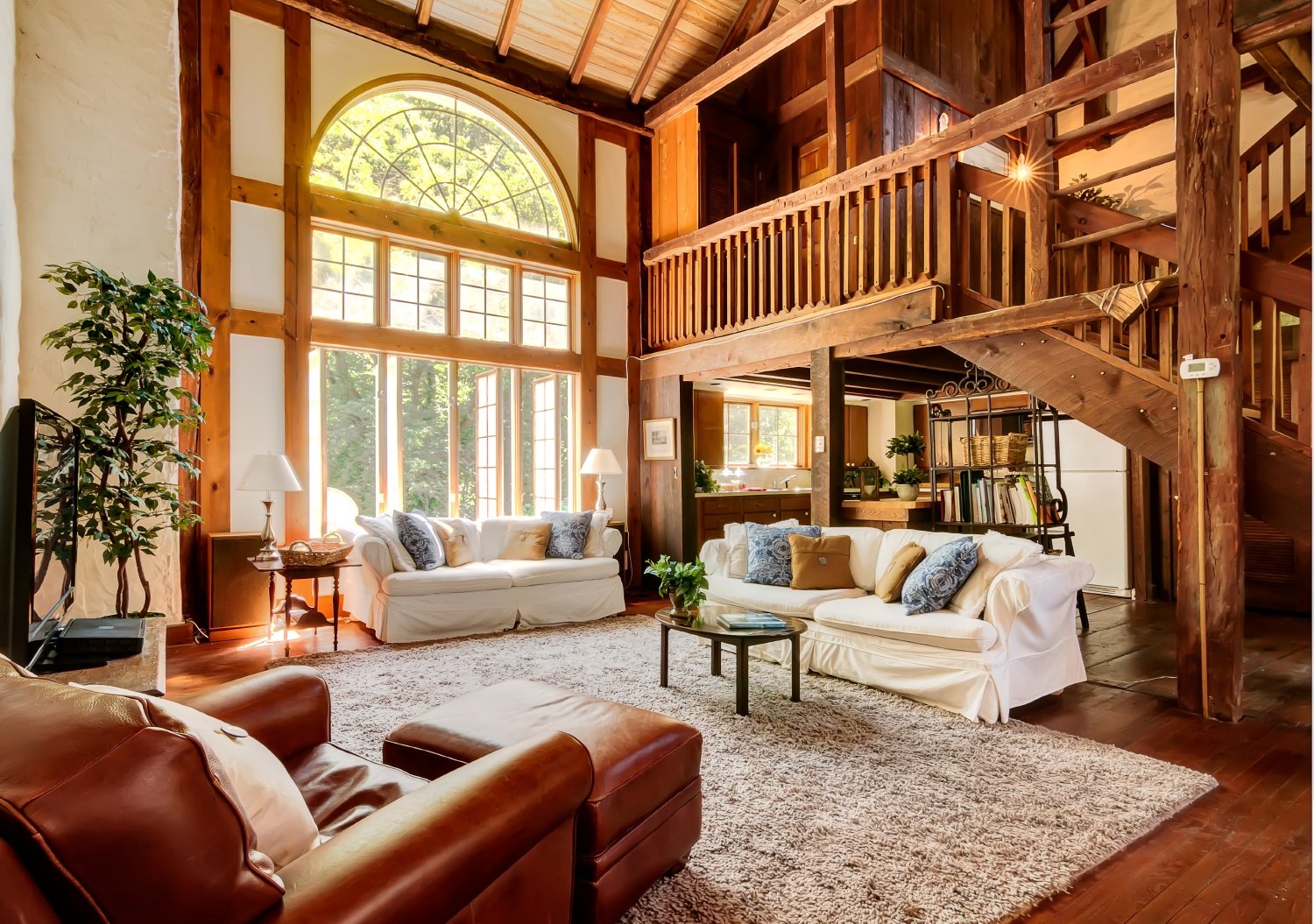
Great room of guest barn

Great room of guest barn

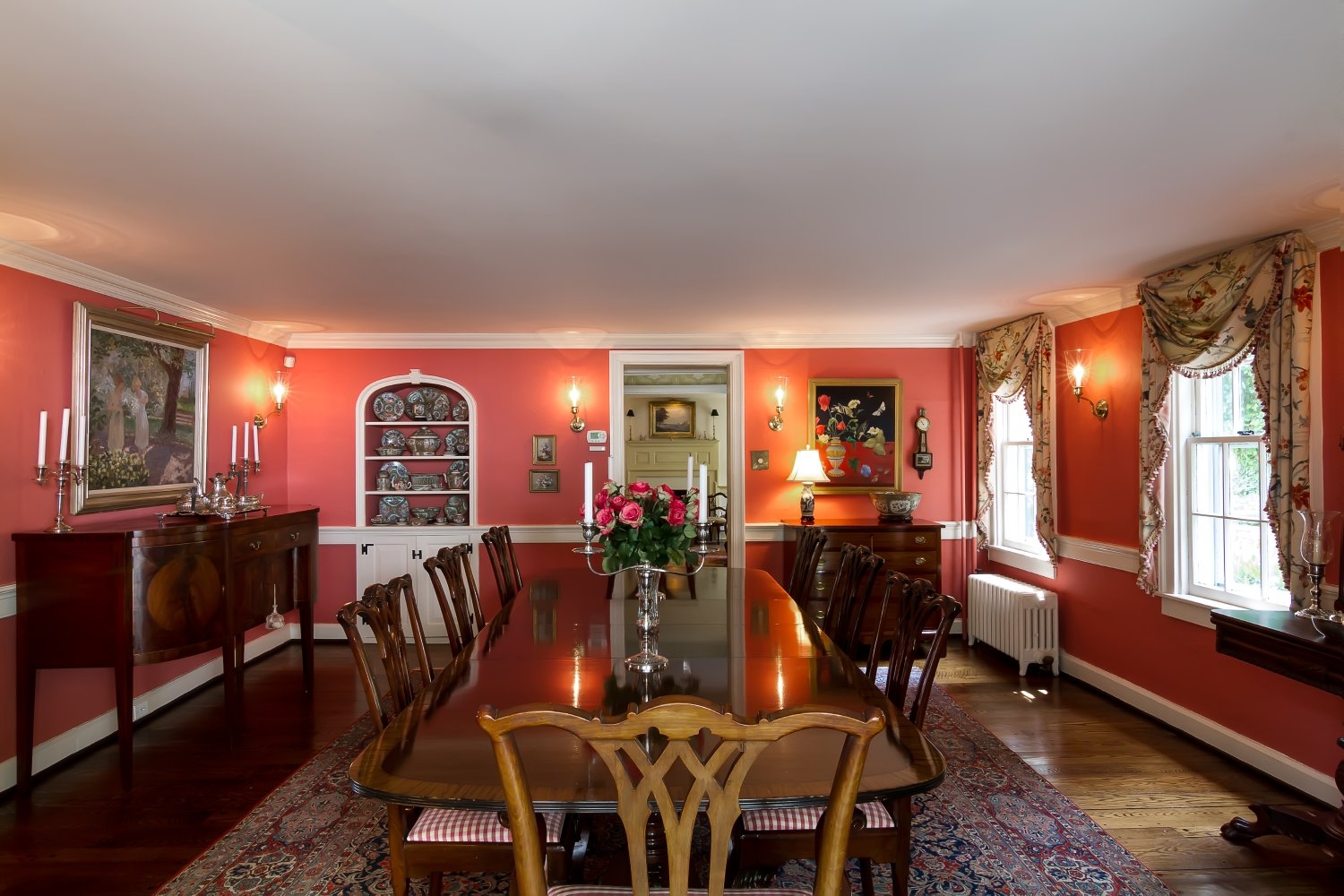
Beautiful 18th c dining room

Beautiful 18th c dining room

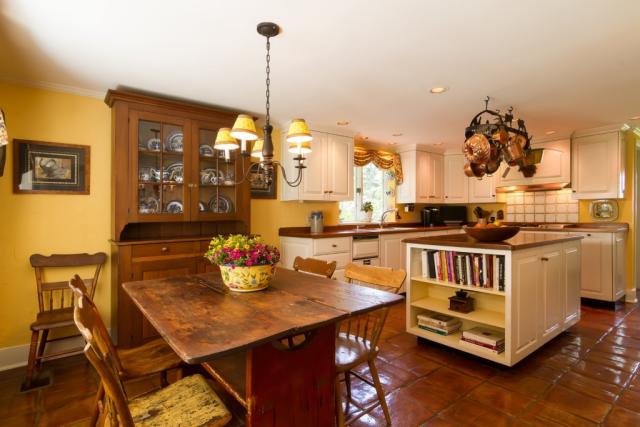
Pugh farmhouse kitchen

Pugh farmhouse kitchen

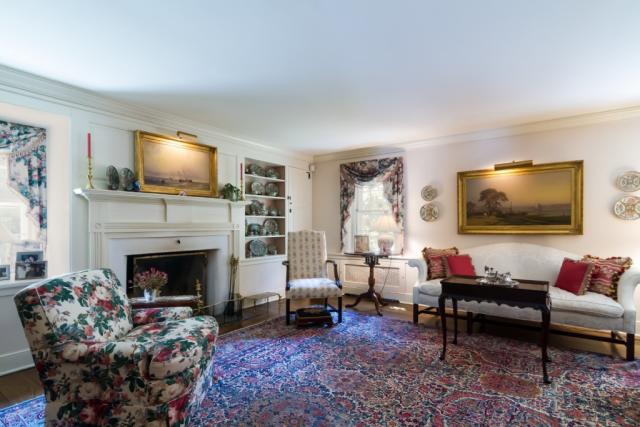
Living room at Ann Pugh farmhouse

Living room at Ann Pugh farmhouse

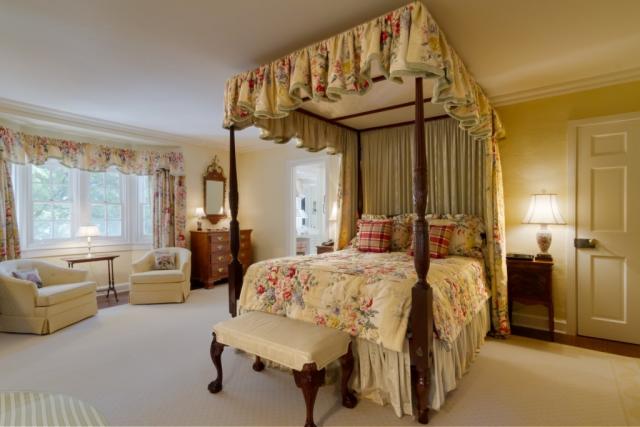
Ann Pugh farmhouse bedroom

Ann Pugh farmhouse bedroom


Budget and Affordable Care Act on TE Special Meeting agenda tonight … Is this the precursor to outsourcing?

There is a special TE School Board meeting scheduled for tonight for 7 PM at Conestoga HS. The two items for priority discussion on the agenda are (1) The Board will consider options to close the projected budget imbalance of approximately $3.1 M for the 2014/15 school year and (2) Presentation of the impact of the Affordable Care Act (ACA) on the School District. Unfortunately, this important special school board meeting conflicts with both the Tredyffrin and Easttown Board of Supervisors organizational and regular meetings, which includes the swearing in of newly elected officials, previously scheduled for tonight.

In the District’s draft budget (included in the agenda), the base model for the 2014/15 school year indicates a $3.1M budget deficit – this model assumes no tax increase from the Act 1 Index or referendum exception (PSERS, Special Ed). In the projection model that includes the Act 1 index (2.1% tax increase) the District’s budget deficit is reduced to $1.2M. A third project model shows the budget deficit reduced to $141K if the District takes the referendum exception (1.1% tax increase) and the Act 1 index (2.1%). The $141K deficit project model would still requires the District to find other cost savings in addition to the 3.2% tax increase to the residents.

If the District imposes the 3.2% tax increase for 2014/15 school year, I think that would make the third year in a row they have imposed the maximum tax increase allowed by state law without a voter referendum. But here’s the disconnect for me – on one hand, the Board has voted to take the maximum tax increase but … for the last several years, the District has come up with multi-million dollar budget surpluses. As examples, the 2011/12 year saw the District in a surplus position of $3.9M and for the 2012/13 year, the surplus was nearly $5M. The budget surplus is not reflected in the District’s draft budget nor indicated in the next year’s budget. The multi-million budget surplus is added to the District’s fund balance and the taxes continue to rise.

Since the multi-million dollar budget surplus is taxpayer dollars, wouldn’t it be great if the taxpayers had a say regarding the surplus? Here’s an idea — Rather than adding additional millions of taxpayer dollars to the fund balance, what about using some of the budget surplus dollars for health insurance benefits to that all TESD employees as covered as required by the Affordable Care Act. Afterall, the District lists ACA and the TEEA teacher contract as the two items to impact the 2014/15 budget.

Following the District’s 2014/15 budget discussion tonight, is an ACA overview by attorney Rhonda Grubbs. Her presentation will discuss how the federal law will affect TESD and its employees. Grubbs is an associate at Wisler Pearlstine, the law firm of Ken Roos, the District’s solicitor. You may recall that Grubbs offered her legal opinion on the ACA at a TE school board meeting last spring in response to the District’s aide, para and substitute teacher outsourcing debate. Don’t get me wrong; I think a legal presentation on the ACA and how it will affect the District and its employees is important. However, in my opinion, residents and employees would have been better served by a third-party legal expert versus a representative from the District’s contracted law firm. And what about an insurance expert – I’m certain that there is any number of local insurance consultants/experts who would make a presentation to the District (and I’m guessing would do so, free of charge).

Under the ACA, employers will be required to provide employees who work more than 30 hours per week with health care benefits. The federal mandate will go into effect for school districts in the 2014/15 school year. Currently T/E aides, paras and substitute teachers do not receive health coverage. For the record, T/E is the only school district in the area that does not provide health insurance for their employees – Great Valley, Radnor and Lower Merion school districts all offer healthcare coverage to all their employees.

The District lists the following ACA compliance options:

1. Health Benefits:

  • Provide health coverage for employees working 30 hours/week or 130 hours/month

2. Contracted Services:

  • Outsource the jobs of aides, paras and substitute teachers

3. Reduce Hours:

  • Reduce hours of aides/paras to 27.5 hours/week and hire additional aides/paras to cover the reduced hours
  • Limit substitute teachers to 3.5 days/week
  • Reduce hours of aides/paras to 27.5 hours/week while increasing the hourly rate to make the reduction in hours neutral to the employee income
  • Reduce hours of aides/paras to 27.5 hours/week while increasing the hourly rate to all aides/paras

4. Incur IRS Penalty

After much debate, the Board decided not to outsource the aides, paras and substitute teachers for the 2013/14 school year. It is my understanding that 40% of the District’s aides/paras did not return for the current school year. Although neither the school board nor the administration has confirmed it – I was told that the positions of non-returning aides/paras who worked 30 hours or more were outsourced. If this is true, than the number of District employees that need to be covered by the ACA has dropped since this issue was debated last year.

As follow-up, how has the outsourcing of the aides/paras worked out for the District? For the record, several parents, aides and paras have told me that the result has been less than satisfactory — it would be interesting to know if the administration and Board are pleased with the job performance of these contracted employees.

I cannot help but think that the administration and the school board may have already made up their minds about the ACA situation. Were it not for the pushback they received last year, I believe that the administration would have already outsourced the jobs of aides, paras and substitute teachers working 30 or more hours per week. Clearly, the handwriting was on the wall in 2013 for the District’s aides, paras and substitute teachers and the 2013/14 school year may prove to be only a one-year reprieve for these employees.

Some have described tonight’s planned Affordable Care Act presentation by the District’s law firm representative as nothing more than a PR move but … I remain hopeful that some of our school board members will show their support of the District’s aides, paras and substitute teachers and fight for them to keep their jobs (and their hours).

A New Year … Take time to look at the stars!

“Twenty years from now you will be more disappointed by the things that you didn’t do than by the ones you did do. So throw off the bowlines. Sail away from the safe harbor. Catch the trade winds in your sails. Explore. Dream. Discover. ” ~ Mark Twain

Armed with hope, we tackle a new year . . .

Oscar Wilde, the great 19th century literary figure, wrote, “We are all in the gutter, but some of us are looking at the stars.” And so, just as we began 2013, so we begin 2014 – with a long list of hopes and dreams for the New Year. Yes, that time of the year is upon us again.

‘Tis the season to reflect on the year gone by and make resolutions and wishes for a better 2014. We resolve to be especially good to ourselves. We’ll eat healthier, we’ll make our lifestyles more sustainable, we’ll turn over that proverbial new leaf that pops up every year around this time . . .

We will wish good thoughts for the New Year. We will hope that our elected officials in Washington, Harrisburg and yes, in Tredyffrin Township always put the people’s best interests ahead of their own.

The year 2014 certainly won’t be a carefree one, but there’s no reason it can’t be a happy one. Happy new years don’t happen automatically. They require a lot of work, a lot of planning, and more than a little bit of luck. There’s not much anyone can do about number three, but those first two factors are something members of this community understand and are good at.

Happy new years are never guaranteed. But as they arrive, they offer the chance for all of us to find our footing and focus and resolve — an opportunity to learn from past mistakes and move forward.

Here’s to a happy 2014 and remembering to take time for “looking at the stars”.

Fantastic News!! PA State Senator Andy Dinniman Announces $14.5 Million Award to Paoli Transportation Project!

I just received the following press release from State Senator Andy Dinniman’s office — what wonderful, unbelievable news!!

Dinniman Announces $14.5 Million for Paoli Transportation Center Project

WEST CHESTER (November 25) – State Senator Andrew Dinniman today announced that $14.5 million in funding has been awarded toward the Paoli Transportation Project.

“This announcement represents my determination to take one the most significant steps forward in the 30-year history of the Paoli Regional Transportation Center,” said Dinniman. “Paoli and the Great Valley Corporate Center have long served as an economic engine for Chester County. The proposed transportation center and train station at Paoli will ensure that our regional infrastructure continues to provide incentives for entrepreneurs from local small-business owners to international corporations, to call Chester County home.”

Funding for the Paoli Intermodal Transportation Center is a vital component of the proposal to relocate and expand the current station to a new site near the existing facility. Specifically, state funding will be directed toward roadway realignment and widening to accommodate the new and expanded regional transportation center. The proposed modern transportation hub in Paoli will improve access for buses, shuttles, and taxis; significantly increase commuter parking to meet both current demand and provide for future ridership; and improve vehicular traffic and reduce congestion for surrounding roadways.

“In light of recent transportation funding legislation in Harrisburg, I worked to ensure Chester County benefited directly from this funding package,” Dinniman continued. “Despite the efforts by some local officials in the House of Representatives to block this vital funding, I am pleased to announce that significant support will be directed for improvement projects such as the Paoli Regional Transportation Center.”

In addition to securing funding for the Paoli Transportation Center, Dinniman announced that more than $123 million in transportation funding will be directed to improvement projects throughout his current legislative district. These projects include $36 million for the repair and replacement of bridges, $17 million for regional roadway and pedestrian-use safety improvements, almost $69 million for roadway repaving, expansion improvement, and other traffic congestion mitigation project throughout Chester County.

“The key to the continuation and growth of our regional economy is directly linked to the strength of our infrastructure,” said Dinniman, noting the 76,000 new jobs estimated to come to Chester County between now and 2040. “With this in mind, I will continue to fight for support of Chester County and will work to ensure that important projects, such as the Paoli Transportation Center, are fully funded and completed.”

Reflections from TE School Board Director Richard Brake

Locally elected school boards are the only entity that has the mission of keeping public schools public. They have a vested interest in retaining public control of schools and ensuring quality education since their actions directly impact local community life.

Richard Brake, a Republican, was defeated on Election Day in his attempt at a second term on the TE School Board; losing to Democrat Scott Dorsey. Monday, November 25 marks the final school board meeting for Brake, Betsy Fadem and Anne Crowley. On Monday, December 2, the torch is officially handed to those newly elected to serve the school district, including Dorsey, Doug Carlson and Virginia Lastner.

The defeat in a local election is not what defines you. I hope that Dr. Brake and other school board (and township supervisor) candidates defeated in the recent election will take the words of Andre Malraux to heart and remain involved in the community – it’s important.

“Often the difference between a successful person and a failure is not one has better abilities or ideas, but the courage that one has to bet on one’s ideas, to take a calculated risk – and to act.”

The following is an editorial written by Rich Brake which appears in the print version of Main Line Suburban this week.

Why I Lost, and the Future of Tredyffrin Politics
By Richard A. Brake, Berwyn, PA

You win some, you lose some. That’s what I told my family and friends after I lost my re-election bid for T/E School Board. As a lifelong Cubs fan and former competitive long-distance runner, I have experienced defeat much more than victory, and so I know that you always learn more from your losses than your wins. I also believe in Providence, and that it is likely that as this door closes, others will certainly open and new opportunities for service will present themselves. I very much enjoyed my time on the Board, and hope that I performed some small public service for the benefit of our community. The bottom line is that the sun rose the day after I lost, and since politics at all levels remains a peripheral part of our lives (which is a good thing I think, though not without its downsides), it would be wise to keep this small little episode in its proper perspective.

With that said, I am reminded of a saying one of my graduate school professors was fond of repeating – “If you’re not interested in politics that’s too bad, because politics is always interested in you.” So I do think that there are important lessons to learn from this campaign season. It is also the case that it is hard to have your entire life’s work, and the principles that this work represents, pilloried, caricatured, demonized, and ridiculed in front of the entire township. It is natural, then, to try to make sense of a difficult experience like this – was it something I said; was it something I did? Are my principles that reprehensible? Did I allow them to blind me to the real issues we faced on the school board?

When I look into the mirror, I don’t see a monster or a label, but a flawed but nevertheless dedicated father, husband, educator, veteran, and public servant – but I know that we all come-off very differently to others than we do to ourselves, and maybe some of the problem was not what I said but how I said it. Regardless, it was clear on election day that there were a lot of people that didn’t like me, or what I supposedly stood for, and that is a bitter pill to swallow, especially when you have to explain this to your kids (by the way, I don’t want to teach creationism in the schools, and have no idea where that outright lie came from!). Obviously I could have done a much better job communicating to the voters who I am and what I really stand for, but it is also the case that the other side bears a great deal of responsibility in creating a false and misleading picture of me. Politics ain’t beanbag, to be sure, but I brought a water pistol to a bazooka fight, and that kind of negative, name-calling brand of politics unfortunately won on November 5th.

As a result, I’d like to spend the rest of this piece examining the case my opponents built against me; whether that kind of campaign, though successful in the short-term, really serves the best interests of our community; and whether someone like me, with the principles I believe in, should be or will ever be allowed, to serve the public trust here in Tredyffrin again. Along the way I hope to suggest a more optimistic, collegial, and effective brand of local politics than the slash and burn variety that we have witnessed these last two election cycles.

So why did I lose? Four years ago I won by 400 votes, 55%-45%. This year I lost by over 200 votes, even though I garnered more votes this year than four years ago. So what happened? From a sheer numbers perspective, the Democrats turned out their base more than the Republicans did, and in a local race like this, turnout is everything. How did they do it? Simple. They labeled me Tea Party to their supporters – and successfully tarred me with the residue of the recent partial government shutdown, the responsibility of which – rightly or wrongly – has been placed by many at the feet of so-called tea party republicans in DC. In other words, instead of focusing their campaign on local issues, the democrats nationalized a local election (sometimes Tip O’Neill is wrong; politics is not always local), and the white-hot antipathy local democrats have for the tea party convinced many more of them than usual to come out and cast their ballots not only against me, but other republicans as well.

Now there is a lot to say about these tactics. First, I think that the partial government shutdown was a collective failure to compromise on the part of the entire elective branches in Washington, and not just some vocal faction that controls only one house out of three. And with the recent problems with the disastrous roll-out of Obamacare, we will just have to see how this DC morality tale plays out in the weeks and months ahead. I also think that by and large, local campaigns should be about local issues and not distant fights in far-away capitols (I will have more to say about those local school issues in a moment). I have no problem with a vigorous and aggressive exchange of views that draw sharp distinctions between candidates. That is the heart of elections – a debate about competing ideas – and as long as those fights are fought on the merits, I am happy to accept the verdict of my community if they feel my ideas won’t work to solve the pressing issues of the day. But that is not what happened here!

What did happen was a classic case of guilt by association. What heinous thing was I guilty of being? Why, a conservative of course, and working in the conservative movement and with local tea party groups on their constitutional education classes. So let’s deal with the charge of being a conservative.

I am a constitutional scholar who has a great reverence for the founding principles of our country, and have spent most of my life teaching the story of our country and its animating leaders and ideas to high schoolers, college students, and ordinary citizens who have expressed an interest in learning more. That’s what I do at the Intercollegiate Studies Institute today, and I am proud of our work in teaching American first principles – constitutional government, free enterprise, individual liberty, personal responsibility, the rule of law, and traditional moral values. Since when have those principles become dangerous and subversive?

So again, I guess I am guilty of being a conservative, and I happen to be a conservative of the Edmund Burke, G.K. Chesterton, Russell Kirk, Robert Nisbet, and Ronald Reagan variety (just to name a few, along with founding fathers like John Adams, James Madison, John Dickinson, and Richard Henry Lee). If you don’t know who these guys are, look them up and tell me if you disagree with them. As a “traditionalist” conservative (www.imaginativeconservative.org), I have great sympathies for localism and grave misgivings about corporate “crony” capitalism. I believe that liberty must always be tempered by the requirements of order and the mercies of justice, which means that we have both rights and duties in a free and virtuous society. I believe in community and what some now refer to as “crunchy” conservatism, whose tenets are best expressed on this great blog www.frontprochrepublic.com. I could go on, but I was under the impression that I was running for my local school board on November 5th, which is why I spent all of my campaign talking about my record on the issues, and not about far-away political battles and my particular brand of conservatism.

But my opponents had other thoughts in mind. For them, conservatism is not a legitimate rival public philosophy that has a distinguished history and respectable intellectual pedigree. My guess is that the local democrats are completely ignorant of the great thinkers of the modern conservative movement (I can assure you that I know and respect, though disagree with, their great thinkers, like Woodrow Wilson, Herbert Croly, John Dewey, and FDR), and instead rely on caricatures of conservatism from the mass media and their own think tanks and interest groups. No, conservatism has become a dirty word, boiled down to the epitaph “Tea Bagger” – and like the term “communism” in the 1950’s, this neo-McCarthyite name-calling seems to have worked among a large swath of the electorate, not only here in Tredyffrin but across the country. I honestly expected more from such a highly-schooled community, but clearly there is an emotional reaction this term engenders and it does the electoral trick (and as a conservative, I too had problems with some of the tactics employed by our politicians in Washington).

I think the main reason why the democrat’s tea party strategy worked is that they equated all conservatives and republicans with the tea party, and then they equated the tea party with one simple word – MEAN. And there are a lot of Tredyffrin residents who view conservatives exactly in this way. We are MEAN because at all levels of government we are skeptical of large government programs, and the growing tax burden they require, actually working to solve the very real problems of poverty, hunger, joblessness, and access to quality health care, housing, and education. But what most people hear, and what conservatives do a horrible job of addressing, is that we are simply against THE PEOPLE who are poor, hungry, jobless, homeless, and lack other basic necessities. And if that was really true, then conservatives would be MEAN, and should not be trusted in public office. Since enough people believed that caricature on November 5th, conservatives like me were shown the door.

The only problem with all of this, besides the glaring rhetorical problem conservatives have, is that in my case, I really am not mean. As a devout and practicing Catholic, I do try to practice my faith through good works for the poor, and a helping hand around the neighborhood. I think those that know me, even those on the other side of the political aisle, know this to be true. I really do believe in the parable of the rich man, the camel, and the eye of a needle, and hence know that we can’t serve both God and Mammon, which is why we must be truly charitable with our time, talent and treasure.

I guess what it comes down to is that I don’t believe that the only or primary way to be charitable is through large bureaucratic government programs that spend most of their resources not on their poor clientele but on salaries and benefits of an ever expanding government work force (I would be for a complete de-regulation and consolidation of welfare assistance, cutting out the government middle-men, and increasing cash payments to the truly poor for a fixed period of time). And with our ever-growing unpaid debts we are incurring – whether it be in Harrisburg with our pensions or in DC with all of our entitlement programs (and now a new one in Obamacare) – the worry I have is that these unsustainable programs will continue to crowd-out private economic activity that produce the jobs that we all need to pay our mortgages, feed our families, and send our kids to school. The best welfare program still remains a good job!

And so to turn the argument on its head, I actually thinks it’s MEANER to continue to rack-up mountains of debt and debase our currency in Washington; not to address our unsustainable pension obligations in Harrisburg; and not to put a brake on higher and higher property taxes here in Tredyffrin – because this failure to act will end up hurting our kids who will be saddled with debt, hyperinflation, bleak job prospects, and lower standards of living; will damage our educational program as more funds are diverted from the classroom to retirees; and will force more seniors on fixed incomes out of their homes. In the end, then, it is MEAN to believe in utopian good intentions and hopelessly complex social engineering schemes that not only fail to ameliorate the true suffering that exists in our fallen world, but will also make it that much harder for those who are trying to play by the rules and be self-sufficient to have the spiritual and material resources they need to take care of themselves and not be overly-reliant on government.

As for the actual school board issues that I thought would be the focus of this campaign, I’m not sure that the outcome on the 5th will help us come to terms with the very real problems we all face as a school community. My opponent Mr. Dorsey criticized me for voting against recent school district budgets, and then his party put up signs saying to stop the cuts to our schools and vote democrat. Hmmn? I know that democrats Kevin Buraks and Karen Cruickshank voted for every district budget these last four years, and I voted for one. Who then voted for the cuts? I was for the cuts if they were also coupled with a more prudent use of our over $30 million reserve fund to cushion the blow to taxpayers during a recession. Since that did not happen the last three years, and we raised taxes higher than we should have and still produced surpluses – I voted against those budgets. Someone needs to tell me which side acted rashly and radically?

Now that I’m off the Board, I can also make clear that when we were negotiating our last teacher contract, which was indeed better than the last one (but that wasn’t hard – average salaries rose 8% per year under that one with virtually no teacher contribution to health care), we were told by our chief negotiator Jeff Sultanik that our $30 million fund balance was a major liability in our bargaining position with the teachers. That is why the leadership of the Board moved $10 million out of the fund balance into the capital fund where it could not be touched. Now, we do have anticipated capital projects that need to be paid for, but the more traditional approach would be to issue a bond and have more than one generation help pay for the capital expenditure. I would have also developed a more transparent plan to draw down some of these reserve funds in a coherent fashion to help cover our growing pension obligations. Instead, the board leadership decided to use part of the fund balance to give our teachers another bonus to help buy labor peace, and not to give our hard-hit taxpayers a break.

I now hear rumblings that the teachers are indicating that they have given all they can give, and that they will not accept further salary and benefit concessions, so my guess is that they will be looking at that reserve fund as ripe for the picking. What will Mr. Dorsey and his allies do then – another pay-off bonus? My guess is that they will also argue that we need more revenue, and with the Act 1 caps in place, they will say that they are forced by circumstances out of their control to adopt an earned income tax for approval by the voters. My position, not surprisingly, would be different. To be clear, I would NOT call for a cut in teacher salaries (just FYI, the average teacher makes over $85,000/year plus pension and benefits for 10 months work), but instead would reduce the rate of growth in teacher salaries by completely revamping the salary matrix, instituting pilot merit pay programs, and asking teachers to pay private-sector levels for their health care. Now that I am off the board, there will be nobody making those kinds of arguments, and your taxes will continue to go up without any commensurate increase in enrollment or academic achievement.

Of course these positions I suggest are not easy to take – some would call them MEAN – but I don’t think realism is mean. It’s actually what is called for when adults confront tough issues, instead of relying primarily on emotional appeals. I do think that conservatives need to do a better job of appealing to both the heads and hearts of our community, but that does not mean we shouldn’t make the necessary changes to our system because it might offend those that stand to gain the most from maintaining the status quo. This is what Edmund Burke, the father of modern conservatism, meant when he reminded us that “a state without the means of some change is without the means of its conservation.” In an ironic twist, it’s conservatives like me who are calling for prudent reforms to the status quo financing of public education in order to save the system, while it is forces on the left – the public sector unions and their democrat allies – who are conservatively maintaining an unsustainable system. I’m for change, and my opponents are for the status quo – who is for hope and change now?

Finally, a few words about the disturbing tone and declining civility of our local politics. Two years ago I was the only school board member in Tredyffrin who spoke out publicly against some of the tactics employed during that election cycle. The issue was the EIT, and while I am strongly opposed to such a measure, I did think we needed to study it, and probably have a public referendum on it to finally put the issue to rest. There were misleading mailings sent out on this issue, and I took a lot of heat from my side of the aisle by speaking out against them in a public meeting. I also had written a letter to the editor prior to the election making my opposition clear, but the Suburban refused to run it given its timing (I have the letter and emails to prove it).

That was not an easy thing for me to do, so I was very disappointed that my opponent Mr. Dorsey forgot what I did and proceeded to launch a negative campaign, not against my school board record, but my closely-held beliefs and educational career. I can tell you that it hurt to have so many people on election-day cast disparaging looks my way, as if I was a leper or worse, because I believe in and work for the Constitution, free enterprise, and traditional values. I guess Mr. Dorsey also forgot how we collaborated together on the bipartisan survey and forum I did with Sean Moir to help increase public input into school affairs. I know Mr. Dorsey is a preacher and believes in Christian values like turning the other cheek, which I certainly plan on doing once I pull the knife out of my back. Eh Tu, Scott?

In the end, we need a better brand of politics that treats rival beliefs not as heresies but as differences between means, not ends. We all want the same things for our community, we just disagree on the size and scope of the government that is required to help us get to where we all want to be. I for one would love, as a start, to completely shift the ratio of taxes we pay, so that most goes to our local governments, then the state, and the rest to Washington. If that happened, not only would there be greater accountability, I think you would be surprised by the new political alliances that would emerge, because I know my brand of communitarian conservatism has a lot in common with such left-of-center causes as historic preservation, open space, local agriculture, the new urbanism, and anti-box store campaigns.

Now don’t get me wrong. I also think Americans as a whole pay far more in taxes than we should (right now, the average American pays 45% of their income in locals, state, and federal taxes, and I think the maximum should be around 30%). I believe that because I would rather allow Americans to keep more of what they earn so they can practice private charity rather than compulsory government assistance, and to take care of their own problems rather than relying too heavily on government welfare. Of course, you are free to disagree with me on this, but that doesn’t make me mean-spirited (and to think so might make you narrow-minded and overly-ideological).

What I am hoping for is an entirely new political paradigm that rejects the old bromides of the right and the left, and the cynical politics of personal destruction, and instead looks hard at the pressing issues of the day and offers common sense solutions and not bumper stickers. And since I now have a lot more time on my hands, I’d be interested in helping begin a new conversation, perhaps even a new coalition, that would be inclusive and not exclusive, that would be open to tea partiers and occupiers, to libertarians and greens, to independents and partisans of all stripes, not because we will always agree with each other, but because we value each other’s opinions and are more interested in the public good rather than private interests that tend to dominate our politics (along with the insiders who benefit from the same old fights).

After all, wouldn’t this be a lot better, and a lot funner, than what we just went through this time around? I certainly would hope so.

Thank you for taking the time to listen to this apologia, and for the great honor of representing you on the T/E School Board. I look forward to continuing the conversation.

Sincerely,

Richard Brake
Berwyn. PA

Seeking Support for Transportation Funding Bill from PA State Rep. Warren Kampf (R-157)

The infrastructure in Pennsylvania is in trouble and our roads, bridges, tunnels and transit systems are not going to fix themselves – they need funding.

Earlier this year the PA Senate passed a $2.5 billion transportation funding proposal but the House has yet to vote on the measure … but time is running short for the state lawmakers to make a decision about the transportation funding bill. When elected officials return to Harrisburg on Tuesday, November 12, following their election recess, they only have about 10 session days to get the bill to Gov. Corbett for his signature before the end of the year.

Most of the money (approximately $1.9 billion) in the transportation bill would go for road, bridge and tunnel improvements with an additional $500 million earmarked for mass transit projects. In April 2011, I cited a newly released Transportation of America study that named Pennsylvania as first in the nation for having the “largest percentage of structurally deficient bridges”. Without additional funding, the structurally deficient bridges are likely to be weight-restricted, and in some cases, closed. Beyond the obvious travel difficulties (and potential safety risks) for motorists, the deteriorating infrastructure is no boon to the state’s economic situation.

Of particular interest in the transportation funding bill is the $500 million component marked for mass transit – one would think that the Paoli Transit Center project would be a candidate. The long and winding road for the Paoli Transit Center looks to now hinge on receiving funding from the proposed transportation bill. According to Tredyffrin Township Manager Bill Martin, in a MLMN article last month, “If the state can’t meet its current infrastructure needs, all new transportation projects – including Paoli’s – will be held up. Funding brings in more funding. Without state dollars for the project, we can’t get federal dollars and we won’t be able to make deals with private developers.”

Beyond the Paoli redevelopment project, the Tredyffrin residents whose properties are close to the PA Turnpike, specifically in the Great Valley, Chesterbrook and Glenhardie areas, are seeing the turnpike widening and sound wall plan ‘on hold’ pending the passage of the transportation funding bill. The PA Turnpike Commissioners have not approved their fiscal year 2014 Capital Plan that contains the turnpike widening and associated sound walls in Tredyffrin Township. According to a recent email that I received as a member of the PA Turnpike Design Roundtable, “The delay in the [Capital Plan] approval is linked to the ongoing negotiations for statewide transportation funding. … Hopefully, transportation funding will be address in the near future, and a fiscal year 2014 Capital Plan will be approved.”

The proposed transportation bill that is waiting for approval from State lawmakers significantly impacts two major Tredyffrin Township projects – the Paoli Transit Center and the PA Turnpike (in addition to the improvement of state roads and bridges in the township). The bill overwhelmingly cleared the Senate in June, what is it going to take for the lawmakers in the House to approve it and send it on to Gov. Corbett for his signature?

Low approval ratings and a challenging reelection battle looming, has Corbett stumping for the passage of the transportation bill. According to the latest Franklin & Marshall College poll (October 2013), only one in five registered voters (20%) in Pennsylvania approve of the job that Corbett is doing and 61 percent believe that the state is “off on the wrong track”. You have to think that the passage of a $2.5 billion transportation bill that would improve roads, bridges and transit systems could help boost the Governor’s sagging approval ratings.

State representatives Warren Kampf (R-157) and Duane Milne (R-167) each have a section of the PA Turnpike in their Districts and likewise their Districts overlap in the Paoli redevelopment project. And like Governor Corbett, Republicans Kampf and Milne are both up for reelection in 2014. Milne is on record as supporting the transportation bill, stating in Main Line Suburban, “Without a substantial transportation bill, there is close to zero chance that the Paoli project gets funded in anywhere close to the foreseeable future. Our state is near the bottom in terms of its roads and transportation system. There is no revenue stream that will let us do first-class upgrades to our roads and infrastructure. If there’s no bill, it’s going to hurt our ability to do new projects like Paoli. We’ll be looking at the status quo or at a declining status quo.”

On the other hand, Kampf has been vocal in his opposition of the proposed transportation bill, at least in its present form. Although Kampf in not questioning the need for infrastructure improvements, he objects to lifting the tax ceiling on gas wholesalers that would then be passed onto consumers as a means of paying for transportation improvements. According to his Op-Ed article on TE Patch, Kampf states that the, “passage of this legislation as it is today offers no guarantees for the future of that, or any other, local project.” We know that there is no guarantee on project allocation in the funding bill but there is a flipside to this argument — What happens to the Paoli Transit Center project if the currently proposed transportation bill passes the House without Kampf’s signature?

With neighboring District state representatives at odds over the transportation bill, this could be the death knell for our local train station redevelopment project. If the bill passes without Kampf’s support it seems probable that the funding for the Paoli Transit Center is likely to be used elsewhere

I understand that Rep. Kampf does not want to increase taxes and is particularly concerned about what the increase in gas tax could mean to seniors, families, and small businesses that are already struggling. Kampf claims that the majority of the constituents who have contacted him do not support an increase in gas taxes to fund road, bridges and transit system improvements. As one of his constituents, I disagree. If he spoke to the 4,000 residents in the Great Valley, Chesterbrook and Glenhardie areas impacted by the PA Turnpike widening and sound wall project, I’m guessing that they too would encourage his support of the transportation funding bill.

With a reelection campaign ahead in 2014, is Kampf’s political calculus that the voters will punish him for supporting the transportation bill if it means raising the cost of gas. In my opinion, it is more likely that the voters will punish him if he doesn’t support the bill, especially if it means the loss of the Paoli Transit Center and the PA Turnpike projects for Tredyffrin.

It’s difficult for elected officials to support a tax increase when they are not running for office – but when its election year, the task is all but impossible. If Corbett does not have the proposed transportation funding bill on his desk in 2013, it seems unlikely that it will resurface in 2014 (election year).

The infrastructure in Pennsylvania is in trouble and our roads, bridges, tunnels and transit systems are not going to fix themselves – they need funding and the money has to come from somewhere. The clock is running down for State lawmakers to maake a decision on transportation funding.

Election 2013 Results: Surprises for Tredyffrin Township Board of Supervisors & T/E School Board!

The 2013 Election Day results are in and there are some changes for the Board of Supervisors in Tredyffrin Township and the T/E School Board. National politics and the Tea Party movement certainly appear to have influenced the outcome in some of our local races.

In a surprising upset, two Democratic at-large candidates Murph Wysocki and Mark Freed, beat incumbent Michelle Kichline (R) who currently serves as the chair of the Board of Supervisors and Trip Lukens (R), chair of the township’s Planning Commission. In the middle District supervisor race, EJ Richter (R) beat Laurie Elliot (D). Prior to this election, only 2 Democrats (Paul Drucker and Mark DiFeliciantonio) have ever served on Tredyffrin Township Board of Supervisors. As of Election Day 2013, that number has now doubled.

For the T/E School Board, incumbent school board president Kevin Buraks (D) won his race against opponent Pete Connors (R). However, incumbent Rich Brake (R) lost his seat on the school board to Democratic candidate Scott Dorsey. Election results indicate that Republicans Virginia Lastner and Doug Carlson will join the school board from Easttown Township.

Thank you to all the candidates and congratulations to those who won!

Election Day 2013 — Your Vote is Your Voice!

Don’t complain that our elected officials are not listening. If we don’t bother to vote our voice will not be heard. Those we elect are guided by what we say – particularly when we vote. And if we don’t vote we are telling them that we don’t care what they do and that is dangerous. All polling places are open and will be until 8 PM. Your Vote is Your Voice!

Trish Kreek leaves behind a legacy of public service and independent thought. We mourn her passing.

On Friday, October 25, our community lost a very special person. Losing her courageous battle against cancer, my dear friend Trish Kreek passed away. Her funeral is tomorrow (Tuesday) at 11 AM, St. Peter’s Church in the Great Valley.

The consummate public servant, Trish served on the Tredyffrin Township Planning Commission for 19 years (4 years as chair) and as township supervisor for 6 years. Until her passing, Trish served with me on the Board of Directors of the Tredyffrin Historic Preservation Trust. A board member since the Trust’s inception a decade ago, she inspired us with her outlook on life and living — we will miss her tremendously.

Spirited in her discussion of community issues, Trish was always the ‘lady’ in debate; respectful of others opinions. A Republican by voter registration, Trish supported candidates who best reflected her own values, regardless of party affiliation. Taking the high road by focusing on the issues, she was never one that resorted to disparaging individual members of the community.

However, Trish did want more people to pay attention to local politics and elections and was troubled by lack of voter turnout. In our discussions of local politics, she regularly lamented about the partisan divide, believing that the broader mission should be to address important issues that matter to all of us. Trish never supported the pointless battle between the local political parties and struggled to understand why ‘people’ and ‘issues’ were not the most important factors when voting.

I reflect on Trish’ decades of public service, her spirit and support of this community and our many political discussions. Election Day 2013 is barely a week away. In the perfect world, our local politics would be free of partisan interests and individuals elected to serve would do so for all the community. And the interests of the people would always trump the political party the elected official represents. Of course, as Trish would have agreed, there are no perfect political worlds and this community is no different from the rest.

Why are candidates for local office forced to play party politics? Politics has the ability to bring out either the good or the bad. As I read the political campaign literature from the school board and supervisor candidates, I can only hope that the partisanship will not destroy the fabric of our community. I lament for a future of local nonpartisan elections, where there will victoriously emerge individuals whose intelligence, integrity, intestinal fortitude, character and non-alliance with special interests are beyond question. I wish for a future where important issues and candidate differences can be fairly discussed and openly debated.

“Each man must for himself alone decide what is right and what is wrong, which course is patriotic and which isn’t. You cannot shirk this and be a man. To decide against your conviction is to be an unqualified and inexcusable traitor, both to yourself and to your country, let men label you as they may.” ~ Mark Twain

On Election Day, Tuesday, November 5, we will elect whomever we think will do the best job — or at least that’s how we should cast our ballots. Do not wait until entering the voting booth to start thinking about how to vote. Do your homework – be knowledgeable about the candidates and informed on the issues. Informed voting requires study, thought and reflection in advance of casting your ballot. The people, the voters, get to decide who governs them. That will be the final word on partisan politics in local elections, and local government.

——————————————————————————————–

My dear friend Trish, you touched all that knew you — we will miss you.

“Strange, isn’t it? Each man’s life touches so many other lives. When he isn’t around he leaves an awful hole, doesn’t he?” ~ It’s a Wonderful Life (1946)

Community Matters © 2025 Frontier Theme