Pattye Benson

Community Matters

Tredyffrin Township

Will Ardmore Transit Center’s Funding Issues Impact the Future of Paoli Transportation Center?

The $180 million Ardmore Transit Center planned for downtown Ardmore shares many similarities with the vision many are planning for the Paoli Transportation Center. Ardmore’s downtown facelift is to include replacing the existing train station plus a new Main Street area with 500-car parking garage, stores and a five-story apartment building. The project is set to completely revitalize the historic community of Ardmore by the creation of a new mixed-use village much like what is planned for Paoli.

The developer for the Ardmore project, Dranoff Properties of Philadelphia is asking Lower Merion Commissioners for a one-year extension claiming design issues with Amtrak. In December, Dranoff learned that Amtrak will be upgrading its electrification system in 10 years and the overhead power lines needs to be factored in to the planned design; resulting in at least a 6 months delay. Dranoff’s extension request will be discussed at Lower Merion’s next commissioner meeting. However, residents are learning that there is more than design delays, there are money problems due to SEPTA. If you recall, SEPTA had made a big publicity splash with its announcement of 22 capital projects. However, now SEPTA is saying these projects may have to wait indefinitely. SEPTA’s contribution to the Ardmore Transit Center was to be $10 million – SEPTA’s general manager Joseph Casey is blaming Washington, pointing the finger at the federal government’s decision not to add tolls to Pennsylvania’s I-80.

The Ardmore Transit Center has been bogged down by one problem or another since the project originally launched in 2004 with a federal grant. Just 2 years ago, the original developer pulled out of the project and was replaced by Dranoff Properties. Last year, Carl Dranoff of Dranoff Properties and township commissioners said they were counting on $5.8 million from the Federal Transit Administration, $6 million in state funding for the 500-car parking garage, $10 million from SEPTA, and $250,000 from Montgomery County.

This past Friday, St. Joseph’s University hosted a state House transportation and policy meeting where SEPTA’s general manager revealed that insufficient funding from Washington was forcing SEPTA to cut $110 million from its capital budget for the fiscal year starting July 1. Although extremely frustrating, Dranoff and Lower Merion officials appear to be optimistic that their money troubles will be resolved and that project will go forward. Or is this going to be another sign of the economics of our times where we see major projects such as infrastructure repairs on roads and bridges, transportation centers, etc. all put on indefinite ‘hold’?

Hearing the news on the Ardmore Transit Center project, Rep Jim Gerlach (R) responded, “. . . I am becoming increasingly concerned that continuing delays will ultimately threaten the federal funds I have already worked to obtain. Rather than asking for more delays, the residents and taxpayers deserve a redoubling of efforts by all parties – Amtrak, SEPTA, the township, and the developer – to get this project done as expeditiously as possible.”

So what exactly does this news mean for the Paoli Transportation Center? SEPTA forced to cut their capital budget by $110 million, doesn’t that impact the future of our economic revitalization project in Paoli? Since Ardmore started their transportation center project before Paoli, it would seem that their project is ahead of us for SEPTA, state and federal funding.

I would like for State Rep Paul Drucker to weigh in on the status of funding for Paoli’s transportation center. As the developer for the Paoli Transportation Center, maybe Peter Monaghan of Strategic Realty Investments could comment as to whether he thinks Ardmore’s funding situation with their transit center will have an impact on Paoli’s redevelopment project.


Support Paoli Fire Company – Sample ‘Firkins’ on Tuesday at TJ’s in Paoli

I am very supportive of our local firefighters and all that they do for the community. In addition to keeping the residents safe, our volunteer fire companies (Radnor, Berwyn and Paoli) also engage in year-round fundraising efforts. I’m happy to publicize an upcoming fundraiser for Paoli Fire Company – the community is invited to attend and show their support.

On Tuesday, June 8, 6-10 PM, at TJ’s Restaurant & Drinkery in Paoli, the community is invited to show their support of our Paoli firefighters with a firkin. TJ’s is participating in Philly Beer Week 2010, June 4 – 13 and on Tuesday night will be showing their support with proceeds going to the Paoli Fire Company. Firkins will be coming from Flying Fish, Sly Fox, Dock Street, Stoudts, Troegs, and Yards. Firkins will be tapped at 4 PM; brewers, reps and the Paoli firefighters will arrive at 6 PM.

Not understanding the world of beer-making, I admit that I did not have a clue about firkins. Firkin? What is Firkin? I did a bit of research and found that a firkin is a type of keg that contains “real ale,” also known as “cask-conditioned ale.” So what’s that? Cask-conditioned ale is beer that is naturally carbonated, because the beer is put in the sealed cask, or firkin, before fermentation is complete. The gas produced by the fermentation is then absorbed in the beer. That produces a gentle, natural carbonation. Carbonation in standard kegged and bottled beer is produced by adding carbon dioxide (Co2), or sometimes nitrogen, after fermentation. That’s what gives most beer its fizz.

I may not completely understand the process of a firkin, but I do understand the importance of supporting our firefighters . . . hope to see you Tuesday night at TJ’s!

There are hundreds of events scheduled throughout the city and suburbs for Philly Beer Week 2010. For a full list of participating venues, click here.

Does Tredyffrin Township Need an Ethics Board?

Does Tredyffrin Township need an Ethics Board? Our neighbor, Radnor Township has an Ethics Board which meets on a ‘as needed’ basis. According to Radnor’s website, their Ethics Board . . .hears and investigates any complaints of alleged ethics violations and may render confidential advisory opinions. Their Ethics Board consists of four members, serving five-year terms plus the President of the Board of Commissioners. If we use Radnor’s model, Bob Lamina as chair of the Board of Supervisors would serve on the Board.

Although an Ethics Board presents an interesting tool for local government and the community, is it really necessary or would it help guide the leadership? Interesting question but does our local government need an ethics code? I just don’t know if a ‘ethics code’ would actually make a difference. What is needed are leaders who know conflict of interest when they see one and who avoid it scrupulously. Appearances and public perception play an enormously important role in the effectiveness of our elected officials and the well-being of the community. The point of ethical behaviour from our local leaders is to improve both the perception and the reality of integrity in our local government and to encourage, not discourage, citizens from participating in the government.

Ethics is all about making choices. Here is an interesting statement from the Pennsylvania Association of Township Supervisors, ” . . . As one political expert likes to put it, we’ve entered a “moment in ethical time.” Ever since Watergate, the public has been increasingly insistent that public officials, from senators to township supervisors, walk the straight and narrow. It’s a demand that fueled the passage of ethics laws in many states, including Pennsylvania, where one thing is clear: If you are going to play in the political arena, you better behave. And it’s a mandate that begs the question: How ethical are you?”

Brandywine Conservancy Easement on Hawkins Property Cannot be ‘Undone’

I continue to receive interesting information on the Agnes Irwin’s proposed land development plan in of playing fields on the Hawkins property in Berwyn. As I have previously explained, Berwyn neighbors to the Hawkins property have received anonymous emails and letters from supporters of Irwin’s proposed playing fields. Some of the communication makes claims of other possible buyers, including the Tredyffrin Easttown School District. Much discussion has circled around the Brandywine Conservancy easement and the suggestion by some that the conservancy easement could be broken to allow for other usage of the land.

This may help to set the record straight. I have received a copy of a letter dated March 22, 2010 from Sherri Evans-Stanton, Director of Brandywine Conservancy to the Board of Supervisors, Easttown Township. In reading the letter, there should be no misunderstanding on the issue of the easement protection of the Hawkins property – see excerpt below:

A conservation easement is a restrictive covenant voluntarily placed on land which allows a legally qualified conservation organization (in this case, the Brandywine Conservancy) to enforce it. Conservation easements usually run with the land in perpetuity, as does the Hawkins easement. For many years, conservation easements have been recognized and enforced by the Pennsylvania courts as valid property restrictions, and the Pennsylvania legislature codified these legal principles in 2001 in the Pennsylvania Conservation and Preservation Easements Act (Act 29 of 2001).

The Brandywine Conservancy has over forty years of experience upholding and defending the conservation easements it holds and will continue to do so. It is simply not true (as we have been hearing) that the easement can simply be ignored or “undone” and a housing development, large or small, built on the property.

On the subject of Tredyffrin Easttown School District’s interest in the Hawkins property, I received some new information. I was told that this information is widely known; however it was news to me. Apparently the T/E School Board passed on buying the Hawkins property because they did not want to challenge the open space easements. (In order to build a school would have required the School Board to challenge the conservancy easement). I had previously suggested that the current school budget situation would not have been financially possible at this time. Apparently I stand corrected. I have been told that the School Board could afford to purchase the Hawkins property as the District has a AAA bond rating, but it was determined that the land was not suitable for a school (due to the restrictions associated with the property).

If the T/E School District did not think that T/E could change the easements on the Hawkins property, . . . how is that Agnes Irwin School thinks it has any better chance? Also, remember that our School Board has the ability to condemn property for government need whereas Agnes Irwin’s does not enjoy that same ability.

State Representative Paul Drucker Supports Legislative Reform in Harrisburg

Over the holiday weekend, Pennsylvania State Representative Paul Drucker made a foray in to the world of local journalism. Coming on the heels of a statewide grand jury report which detailed reform proposals in the Commonwealth, was an article by Rep. Drucker discussing legislative reform policy which appeared in the May 30th edition of the Daily Local newspaper. (see complete article below).

I completely support Rep. Drucker’s appeal to terminate or at least drastically reduce taxpayer-funded political caucuses. As a start, I would appreciate the imposing of tougher ethics practices and the halt of all payments and benefits to staffers on leave to campaigns and ban compensatory time. If lasting reform is to be recognized in the Commonwealth, the polarization of party politics in Harrisburg needs to end.

Several months ago in Community Matters, I wrote about our state representatives usage of per diem (Pennsylvania legislators can use tax-free per diems for home purchase . . . what about taxability issues for fraud issues?)amounting to $155+/day and its ‘use’ considered a ‘legal perk’ of the job. Some Pennsylvania state legislators are using tax-free per diems as a means of financing real estate purchases. Annually, Pennsylvania taxpayers finance approximately $2.7 million in reimbursed per diems for our elected officials. Previously, I have voiced my concern to Rep Drucker in regards to what I view as misuse of per diems by some of our legislators (although seemingly legal); I am pleased to read that Rep. Drucker supports reform in this area. I would like to see the per diem payments to lawmakers stopped, or at least tied to actual expenses. Why should the taxpayers finance tax-free per diems for home purchases by our legislators?

The inherent problem is that any changes in Harrisburg require legislative approval and I’m betting that the legislature is in no rush to address these reforms. It is good to know that our own state representative supports change; and is willing to take a stand on behalf of Pennsylvania taxpayers.

Everybody Knows Reforms Are Needed

By PAUL DRUCKER, Guest Columnist

It is a sad day when it takes a grand jury to point out what the rest of us already know — that the state Legislature is in serious need of reform. In case you missed it, the grand jury that has been looking at the Bonusgate scandal for the past two years issued a report this week suggesting some badly needed changes to the way business is done in Harrisburg.

There are many of us who have been saying this for years. In fact, the need to make state government more responsive — and more deserving of the public’s trust — was one of the main reasons I decided to run for the state Legislature. I hope the grand jury recommendations are a wake-up call for those in the Legislature who want to keep things as they are. I personally think that when an impartial group of Pennsylvania citizens speaks about an issue this important, we should listen.

As outlined in a story printed in the Daily Local News this week, there are a number of recommendations made by the grand jury that I believe should be implemented, in order to restore public faith in state government and ensure its efficient functioning. Among these suggestions are:

Reducing the number of state employees. The average number of employees per state legislator is nine employees. I agree that this number is too high. I currently employ three full-time staff members for two offices, and one staff member who only works one day per week. Despite this, in 2009 my office was in the top 15 of constituents served out of all Democratic state representatives.

Fixing the budget process. The state budget process, as we all know, is broken. The lack of line-item control by the rank and file is frustrating and non-productive. The lack of communication between the two caucuses during budget negotiations sets the stage for budget battles and gridlock. As the grand jury recommends, I believe taxpayer-funded political caucuses should either be terminated, or modified drastically to help reduce paralyzing partisan politics.

Reforming discretionary accounts. The problem with these accounts is not the projects that are funded as much as the secretive process. I believe discretionary grant-making should be publicly disclosed, as Congress has done with appropriations earmarks.

The fact that there are separate, taxpayer-funded human resources, information technology and print shops for the Democratic and Republican caucuses is a waste of taxpayer dollars. State legislators’ staff should be employed by the state — not a political caucus. Salaries and job descriptions and all personnel matters should be handled by one state non-partisan office, as should IT support and print and copy needs.

The outdated practice of blanket per-diem payments needs to be modified. It is certainly fair to reimburse legislators when they are required to be in Harrisburg, away from home. I do accept per diem payments when I am required to be in Harrisburg, but I believe I have been prudent and have not abused the system. In addition, I do not use a state car, I do not accept reimbursement for mileage to attend district events (which would amount to a large sum of taxpayer dollars), my staff salary total is in the lower end of all representatives, and my staff has not received any raise in salary since my term began.

In July 2009, I stood with a bipartisan group of legislators and introduced a package of reforms. It included legislation that would require state representatives to pay a percentage of their salary toward their health care costs, redistricting legislation, and a ban on bonuses for all state employees. It also included legislation to create a searchable Web site to track all state legislative expenses over $1,000, and restrict the awarding of contracts that may result in public officials’ financial gain, including the financial gain of family members. These bills are now awaiting action by committees. They are all good ideas, and they need to be enacted into law, but it is unlikely that they will move unless all the members of the General Assembly feel more pressure for reform.

This is why the grand jury report this week is so important, and why we should be thanking them for their work — not dismissing them. Legislative reform must be one of the top priorities in Harrisburg, because important duties, like passing a responsible budget our constituents deserve — cannot be done efficiently until the house has been reformed.

For my part, I will continue to work toward change. I will press my colleagues to act on the package of reforms we introduced last year, and I will support legislation that improves the way Harrisburg works.

(Paul Drucker, of Wayne, represents the 157th Legislative District in the Pennsylvania House of Representatives.)

Radnor’s Interim Finance Director Discovers a New Way to Lose $600K . . . Whoops, the shading was too dark to read!

Here’s a new excuse for an accounting mistake. It was announced this week at Radnor’s Board of Commissioner’s Meeting that the township lost $600K . . . rather they never actually had it. Apparently, some of the columns on the Excel accounting sheets are shaded too darkly to accurately read so the wrong numbers may have been picked up. When the township’s commissioners asked Alison Rudolf, Radnor’s interim finance director to explain why the actual and working budget numbers are different, her explanation begins with maybe there was an ‘absence of some zeros’! I couldn’t make this up — and to explain sloppy accounting with the excuse that the Excel spreadsheet’s shading was too dark!

Apparently, Commissioner John Fisher, who sits on the township’s finance and audit committee, complained in the past that the shading on the Excel spreadsheet was too dark . . . he told the residents at the commissioner’s meeting that he would lighten his own copy before printing so that it was readable. Even after Commissioner Fisher alerted the finance department of the situation, the shading problem was ignored. Lightening up the use of shading in a document does not take an advanced degree in computer science . . . and now this is the finance director’s excuse for the $600K accounting error!

The inability of the finance department to reconcile the books would have been a stunning revelation by itself; but for Radnor’s Township Manager and Finance Director to offer this kind of excuse is truly remarkable! Ms. Rudolf explained that the township uses two different kinds of accounting systems, one for budgeting and the other for everything else. The budget system uses Excel. The Excel spreadsheets were so darkly shaded that they were not readable, so Ms. Rudolf states it was difficult to read some of the entries! Are the residents to believe that the finance department then just guessed what the numbers were? Does this explain Ms. Rudolf’s assertion that perhaps some zeros just went missing?

Another problem with Radnor’s 2010 budget — the budget was based on a significant transfer of revenues from the Sewer Fund. (do you remember Tredyffrin’s Sewer Fund discussion from December?) It now looks as if the Radnor’s Board of Commissioners spent money from the Sewer Fund that was not there. A reduction in usage due to conservation efforts and the economic downturn meant another large shortfall in anticipated revenues.

One bright spot for Radnor’s residents is that this recent budget problem is forcing the commissioners and the township’s finance department to focus on the revenues and expenditures of their 2010 budget. I would also guess this situation will encourage 2011 budget discussions in Radnor Township earlier rather than later. And just remember, Radnor Township has an Interim Finance Director and this $600K error occurred . . . what does that say for Tredyffrin Township? We have not had a Finance Director since March. Maybe a status report on where the township stands with getting this position filled would be a good idea!

Will Delaware Valley Friends School and TEYSA listen to the neighbors concerns about field lighting and other issues?

Last night a diverse group of people came together at Delaware Valley Friends School to discuss Tredyffrin Easttown Youth Soccer Association’s (TEYSA) artificial turf field and the associated open resident issues related to its construction and current usage. Representatives from DVFS and TEYSA met with local residents from Valley Hills, Paoli Pointe and Paoli Apartments. Also in attendance was township solicitor Tom Hogan, Zoning Officer Emmy Balderserre and township supervisor Kampf.

I am currently in Seattle and therefore unable to attend the meeting. I did receive notes from several Valley Hills residents and I will offer a meeting summary. (For any of you who attended the meeting, please feel free to offer your comments). Residents left the meeting with a sense that progress was made with the airing and discussion of issues. Two particular issues surfaced in the discussion; the lighting of the turf field and landscaping replacement.

The general consensus among the East Central Avenue area residents was they would prefer there be no lighting of DVFS field. However, it is understood that the preferred ‘no lighting’ option is probably not realistic. With that said, the residents believe that the current ‘temporary lighting’ is less desirable than a permanent lighting solution which would include usage covenants. One of the problems with the temporary lighting is the requirement for a generator whereas permanent lighting would not require a generator. The running of the generator is very noisy and additionally the temporary lighting is deemed to be more invasive to the neighbors. Although TEYSA representatives presented a rough lighting plan at the meeting, there is concern among the neighbors that TEYSA will drag its feet on the permanent light issue, due to the cost. It is hoped that a permanent lighting solution can be in place by fall which would have a calming effect on the neighbors most affected.

The open landscaping issue faired better with the neighbors although the planting season is a fall activity and therefore must be placed on hold until that time. The mature trees that were lost cannot be easily replaced; and the replacement landscaping will take time to grow.

The community members left the meeting feeling that real progress was made and that their concerns were heard by DVFS and TEYSA; it is hoped that the momentum can continue. It is my understanding that any changes to the turf field will require zoning board approval. Involving the neighbors in the discussion regarding the field’s usage, times of operation, lighting, etc. and any proposed zoning changes should allow for a more successful outcome. The community members were encouraged by Tom Hogan’s involvement in the process and it is hoped that he will continue to stay involved.

Obviously the meeting did not completely solve all the problems but the residents left the meeting feeling hopeful. I will look forward to hearing updates from the East Central Avenue neighbors.

Devon Resident Bill Bellew’s Remarks at Monday’s Board of Supervisors Meeting Appear as Letter to the Editor

In a post yesterday, I provided a YouTube link for Bill Bellew’s comments at Monday night’s Board of Supervisor meeting. Several people have asked me if I had a ‘hard copy’ of his remarks so I was delighted to see that Bill submitted his comments in a Letter to the Editor in this week’s edition of the Main Line Suburban Life newspaper. Bill’s words provide a powerful statement. (see below).

I agree with Bill that we (supervisors and residents) need to be looking ahead to the 2011 budget. Mid-year provides an excellent opportunity to review the actual vs budgeted expenses and revenues of the 2010 budget to date. (the next supervisors meeting in June marks the halfway point). In addition to a mid year 2010 budget review, work needs to begin on the 2011 budget. The 2010 township budget required major cuts across the board, including personnel, fire and library funding, etc. If you recall, by this time last year the BAWG was in place and well underway in 2010 budget discussions.

The 2011 budget cannot wait until November or December; delaying the discussion does not demonstrate fiscal responsibility.

Tredyffrin drama must end

To the Editor:

Day after day, Tredyffrin seems to be bombarded with political drama without an end in sight. Now in May of 2010, the budget “play” leading up to the 2010 year is still out there. A personal opinion might be that the Board of Supervisors might have told the firefighters serving the township ahead of time that a cut in funding had to be made. Added to that might have been a suggestion that together, the BOS and the firefighters could join forces to fill the void.

The reality is that filling the void was not on the BOS’ minds beforehand. Only when the “people of all walks of life” rose in a concerted chorus to point out what impact the “modest 5-percent” cut would have on the three fire companies (our leading volunteers) did the BOS see the dilemma they created for themselves.

For some unknown reason, the BOS has been unwilling to share where the $24,000-plus in contributions to fill the void came from. Let’s end the political drama three of the BOS members created. Here is what I know to be fact:

1) The Republican Party spearheaded the effort to acquire the funding.

2) They did it ahead of schedule and raised more than they thought they would.

3) The party did not write a check – their members wrote individual checks in excess of $5,000 – or approximately 20 percent of the total raised.

4) Six large donations from companies, trusts, and law firms totaled $5,500 – or approximately 23 percent of the total raised.

5) Eight present or former members of the BOS contributed $2,800.

6) One present board member contributed $5,000, which is not part of other contributions listed here. Yes – five thousand dollars.

7) The remainder came from other sources solicited by the Republican Party.

8) Now that is political purpose!!! Hats off to the party for this work. Thank you from all of us.

What many citizens do not understand is why the BOS has taken courses of action that have stirred controversy and raised the hair on the back of our collective necks for no intelligent reason. The two examples to be mentioned are the cutting of the fire-company budget without sharing that with the firefighters beforehand, and the totally unbelievable vote on the sidewalks near Mt. Pleasant.

Transparency in this township is starting to disappear. Some of the present board appear to be turning what happens in Tredyffrin into a back-room game to be run by political hacks.

A few weeks ago, the chair of the BOS wrote his second major article since Dec. 9 of last year explaining himself and his actions. Why? Why is it necessary that so much effort be put into all of this when – if the BOS had been up-front and open – we could be talking about the future and not the past?

What were you thinking? We are not stupid people. My personal feeling is that the BOS has brought the dysfunctional politics of Washington to our community. Ladies and gentlemen of the board – respectfully – knock it off.

We are looking for leadership – not a “bully pulpit” approach to township business. We are looking for progress – not a drama. If the chair thinks “we’re doing what we believe is the people’s business” by the present-day actions of this board, then he is sadly mistaken. The political game is exactly that – a game. The BOS was elected to govern. do it !!!

We have too many important issues in front of us – the largest of which is how we will fund 2011 and beyond. How do we partner with each other to raise funds both privately and collectively? How do we encourage the volunteer spirit to continue across the entire township playing field? How do we make the necessary changes in the budget process?

Keep your eye on the ball, members of the board. Serve the constituents who elected you – all of them. No more surprises. The people of Tredyffrin are watching.

This is indeed a great place to live, and the BOS has helped make it that. Don’t go backwards.

Bill Bellew , Devon

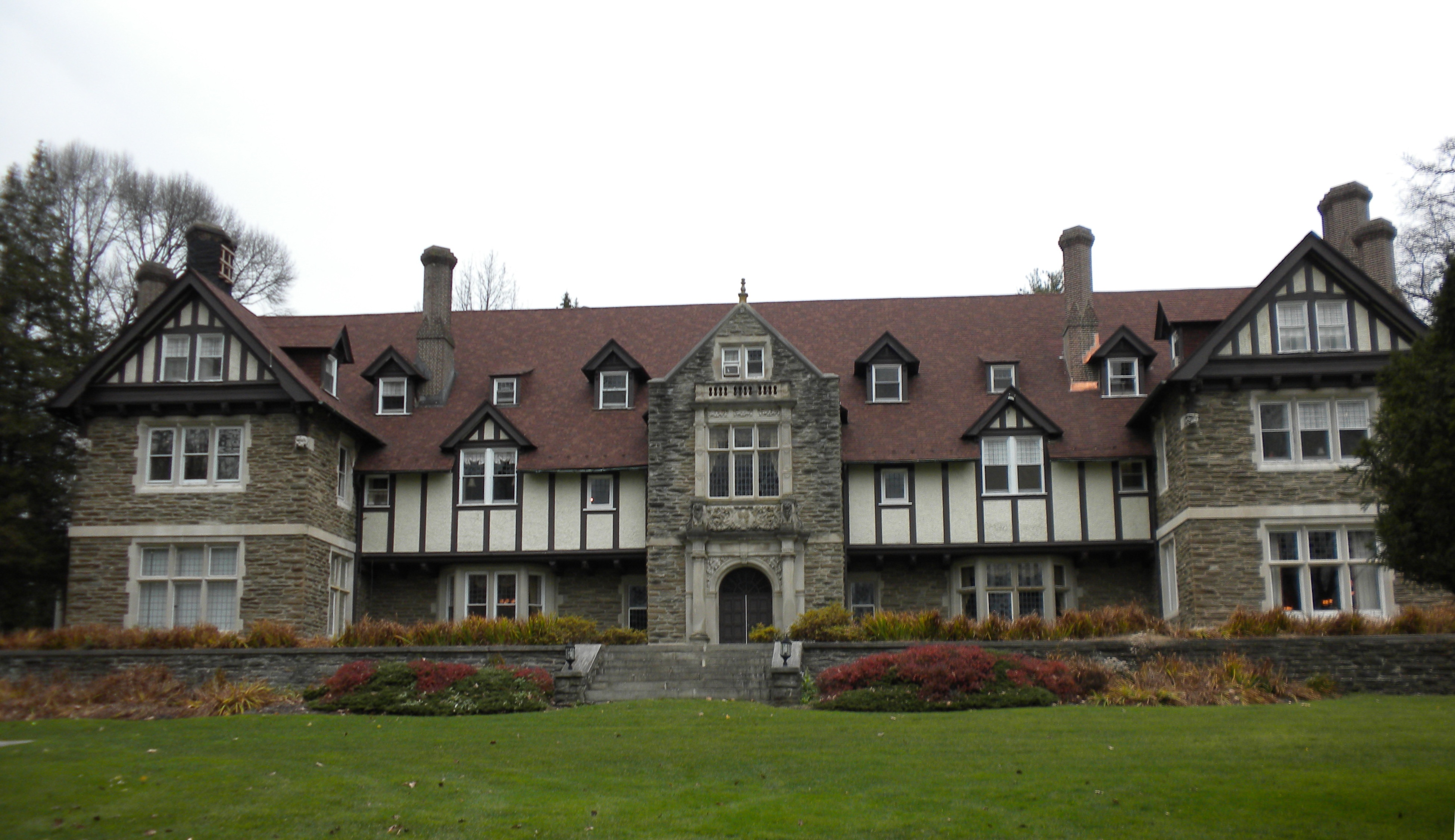
Woodcrest Estate Mansion on Cabrini College Campus . . . is it haunted? Come to the Tredyffrin Historic Preservation Trust Lecture and find out!

The Woodcrest Estate Mansion on the campus of Cabrini College routinely makes the top ten list for the most haunted colleges in America. It makes sense for some to be able to disregard these stories completely. For many, it isn’t until they find themselves alone at night walking behind the Woodcrest mansion or in their room that they begin to question the possibility of ghosts on campus. From the first night of orientation students are told the tales of happenings of long ago in the very buildings where they live, learn and visit every day. Some people choose not to believe the legends, passing it off as only that, a legend. Others know from experience that unexplainable things are known to take place every so often right here on campus. Are there footsteps from beyond at Cabrini’s Woodcrest Mansion?

Wayne resident Martha Dale will be at the historic Duportail House in Chesterbrook on Wednesday, May 26 as guest speaker of Tredyffrin Historic Preservation Trust’s Spring Lecture Series. Speaking on the history of the Woodcrest Estate, Mrs. Dale’s background includes serving as alumni director at Cabrini College for over 25 years and as coordinator of historical projects during the College’s 50th Anniversary celebration, 2007-08. Mrs. Dale spearheaded an alumni effort to learn more about the history of the former Woodcrest Estate Mansion, the centerpiece of the Cabrini College campus and a landmark on the Philadelphia Main Line. Mrs. Dale was instrumental in having the Mansion listed on the National Register of Historic Places in 2009. A reception will begin at 7 PM followed by lecture at 7:30 PM. Lecture admission is $15 and all proceeds go toward Tredyffrin Historic Preservation Trust’s rebuilding effort of the Jones Log Barn at the DuPortail House location.

Mrs. Dale will lecture on the history of the Woodcrest Estate, which was built in 1901 by James W. Paul, a son-in-law of financier and philanthropist Anthony J. Drexel, and designed by architect Horace Trumbauer. Mr. Paul’s heirs owned Woodcrest until 1925. In 1925, members of the Paul family sold the Mansion and 120 acres of the Woodcrest Estate to Dr. John T. Dorrance, of the Campbell’s Soup Company. Designed by Philadelphia architect Horace Trumbauer and constructed more than 100 years ago, much of the 51-room mansion remains virtually unchanged. Much of the interior was restored to its original elegance for the College’s 50th anniversary. The architecture includes elements of 15th, 16th and 17th century English design and is primarily modeled after the Elizabethan (Tudor) style.

For more information or to make a reservation the lecture, contact Polly Hagan, 610. 647.1051 or info@tredyffrinhistory.org

“Dysfunctional Politics of Washington Brought to Tredyffrin” . . . so says resident Bill Bellew

During the citizen – new matters portion of the supervisors meeting last night, township resident Bill Bellew delivered a well-written, measured statement to the Board of Supervisors concerning their actions over the last few months. His remarks primarily addressed the cut in fire funding and subsequent supervisor fundraising efforts and the St. Davids sidewalk decision.

Bill’s comments specifically addressed chairman Lamina’s recent letters to the editors in the paper and the leadership of the Board of Supervisors. At one point, Bill suggested that the Board had brought the “dysfunctional politics of Washington to Tredyffrin”.

In closing, Bellew remarks that ” . . . We are looking for leadership; not the bully pulpit. We are looking for progress; not drama. If you, Bob [Lamina], think you are doing the people’s business by the present day actions of this board, you are sadly mistaken. The political game is exactly that, a game. The Board was elected to govern, just do it. . . “

I believe that Bill’s remarks last night represent the concerns of many of us in the community. Listening to Bill’s statement, I would love to think that some of our elected officials would do some soul-searching . . . what’s the saying, if the shoe fits, wear it? But I fear that like myself and others who have raised similar concerns and questions of the Board, Mr. Bellew’s remarks will simply be dismissed. Or . . . will Lamina’s response be another letter to the editor?

Please click here to review see all of Bill’s comments captured on YouTube — his remarks are powerful!

Community Matters © 2025 Frontier Theme