Pattye Benson

Community Matters

Tredyffrin Township

Tredyffrin Township’s Constitutional Conversations: The Battle for Ratification

Segment 2, ‘The Battle for Ratification’ of the Constitutional Conversations cable series is now available for viewing. According to the description provided by co-hosts Rich Brake and Dennis Gallagher, this segment discusses “… the process and the political intrigue surrounding the ratification of America’s new Constitution. They also introduce how the two founding father groups, the Federalists and the Anti-Federalists, debated and resolved their philosophical differences to arrive at a compromise resulting in America’s new system of government.”

I watched Segment 2 of the series, and with no disrespect intended, it took me 3 failed attempts before I could get past the first 10 min. of the 29-min. show. Although both Brake and Gallagher are identified as ‘Constitution Scholars’, from my vantage point it seemed that Gallagher’s role was that of an interviewer asking questions, with responses left to Brake. Not that there is anything wrong with that approach, I just think it is a bit of a misnomer that they refer to themselves as co-hosts. In my opinion, this segment was a bit disjointed in the delivery of information with some technical, editing and sound issues, making it difficult to follow at times.

When discussing the ratification of the Constitution, many nuances exist between the Federalists and the Anti-Federalist point of views and they should be thoroughly considered — each group waged a verbal war in hopes of winning public support for their side. The supporters of the Constitution, the Federalists, argued that the nation needed a stronger national government to create order and stability whereas the anti-Federalists supported the states’ rights approach to government. Arguing that the Constitution gave too much power to the national government at the expense of the state governments, the Bill of Rights became a weapon of defense and the most effective tool for the anti-Federalists. They demanded a more balanced Constitution, one that would be careful to protect the rights of the people and to set limitations on the power of the government. The American people had just fought a war to defend their rights and they did not want an intimidating national government taking those rights away again. Although the anti-Federalists lost the ratification battle, the Bill of Rights stands as a lasting testament to the importance of individual rights.

I found Brake’s discussion of citizen representation interesting. He compares the increased size of voting districts today versus the size they were at the time of the ratification of the Constitution and ponders the question, “Can representation actually take place well, in a setting that is large and distant from the public?” Due to the size of voting districts, Brake talks about the increased resources and finances required by politicians seeking office today. Due to the financial demands of political campaigns, Brake laments that is likely that only the financially elite can afford to seek office. As a result, there is a risk that elected ‘elite’ may not necessarily represent those that they seek to serve. As a proponent of campaign finance reform, I agree with Brake on this point.

In the discussion of the original 10 amendments contained in the Bill of Rights, Brake identifies several, including freedom of speech, religion, petition, right to bear arms, freedom from search and seizure, right to counsel, etc. He points specifically to the importance of the 10th amendment — “The powers not delegated to the United States by the Constitution, nor prohibited by it to the States, are reserved to the States respectively, or to the people.” Based on Brake’s emphasis on the rights of the States under the Constitution, I was surprised that he did not use the opportunity to discuss the 10th amendment as related to the Supreme Court decision on the health care bill. There are some, including Mitt Romney who believe that the 10th Amendment places the responsibility and care of health care to the people with the individual states.

I lay no claim as a ‘Constitution Scholar’ and offer these remarks on Constitutional Conversations solely as my opinion. I suggest taking 29 minutes, watch Segment 2: Battle for Ratification, and offer your own thoughts. Click here to watch the second installment of Constitutional Conversations.

Go Green … 3rd Annual Eco-Tour Tomorrow in Tredyffrin!

Tomorrow marks the third year for the Tredyffrin Backyard Eco-Tour — Saturday, July 7, eight eco-gardeners in and around Tredyffrin will welcome the public in to their backyards.

The Tredyffrin Backyard Eco Tour will offer gardeners, aspiring gardeners or people who want to learn more about gardening in an environmentally friendly way, an opportunity to see some of the most creative uses of natural landscapes. Living in a sustainable community nowadays is becoming more important as our water and non-renewable resources are becoming scarcer.

  • Tour the gold certified “green” building at Jenkins Arboretum
  • Discover the Discovery Garden at Heritage School (fun for kids)
  • How to install a small pond or water feature in your yard
  • Find out about implementing solar and geothermal energy for homes
  • See 3 Certified Wildlife Habitats and learn how to create your own
  • Learn about locally native plants – trees, shrubs, perennials, vines, etc.
  • Learn how to save $$ on fertilizers, herbicides, lawn care & maintenance

This is a great chance to learn about using native plants, renewable energy, and sustainable practices in your own home and garden. Eco-gardens prove that you can have a landscape that is beautiful and unique – and gentle on the environment. Not to be missed, the tour will provide visitors with plenty of inspiring ideas for their own gardens.

DATE: Saturday, July 7th (rain or shine)

TIME: 10 am to 4 pm (arrive & depart on your own schedule)

STARTING LOCATION: Purchase your “badge” and get map & directions at Tredyffrin Township Library parking lot (582 Upper Gulph Rd., Strafford/Wayne, PA 19087) from 9:45 am to 3:00 pm

COST: $10 per adult, children under 18 free

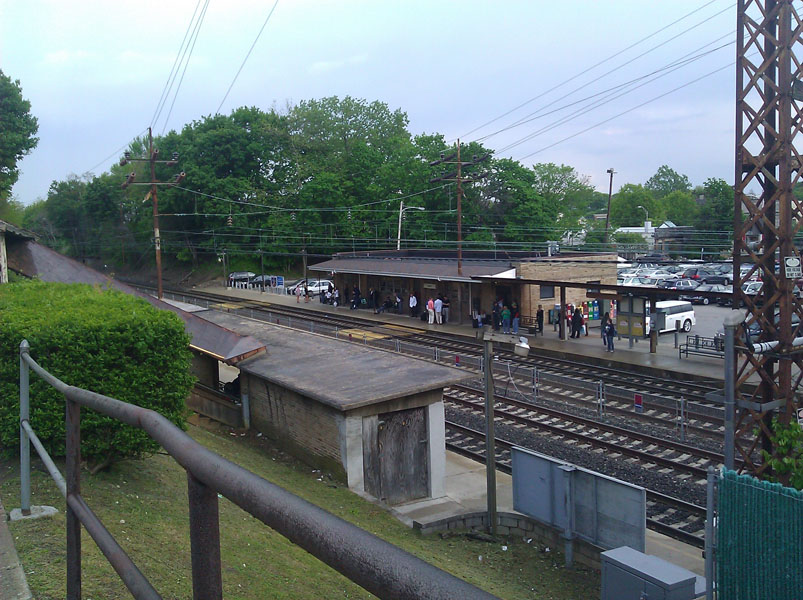
Paoli Transportation Center project — Taking Another Step

Monday morning marks the next step for the Paoli Transportation Center project!

Five months ago on January 31, I wrote that SEPTA had awarded a $7.5 million contract to Gannett Fleming for the design of a new Paoli regional rail station and parking garage. The plan calls for building the new station 80 feet west of the current train station location to better connect SEPTA and private buses. The plan will involve high-level platforms and the reworking of Amtrak interlocking system. PennDOT selected Parsons Brinckerhoff for the interlocking design work on the Keystone Line between Philadelphia and Harrisburg, which include the Paoli Transportation Center. Gannett Fleming design work is to take place through 2014.

At the same time that SEPTA announced its award to Gannett Fleming, the township selected McMahon Associates as the engineering consultant team to complete a study to outline recommendations for the necessary road improvements, including the bridge, needed to support the new transportation center. The McMahon study will address congestion, public safety and establish a plan for an overall vision for the new train station through traffic calming, streetscape and intersection modifications. This is a state-funded project and completion is expected by the end of 2013.

Tredyffrin selected Bergmann Associates as the engineering team to design the signal and roadway improvements for the intersection at Rt. 252 and 30. The design will be based on the 2011 feasibility study. This design study is state and federally funded and expected to be completed by 2013/14.

Well folks, it looks like the Paoli Transportation project is taking its next step – tomorrow, Monday, June 25 at 7:30 AM, there’s a press conference at Paoli Village Shoppes to officially announce the start of the Paoli Transportation Center project.

Report from Tredyffrin’s Business Development Advisory Committee … I was hoping for ‘New’ news!

Last night’s Board of Supervisors meeting and public hearing for the Trout Creek Overlay Ordinance was another marathon 4-hour meeting, ending at nearly midnight. An overflow crowd along with Channel 6 ABC news crew attended the early part of the meeting, specifically for the swearing-in ceremony of the police promotions of Lt. Leon Jaskuta, Lt. Taro Landis, Sgt. Ryan Scott, Sgt. Michelle Major and Sgt. Tom Bereda. Congratulations to these members of Tredyffrin’s police department.

The meeting featured the long-awaited presentation from the Business Development Advisory Committee. The Board of Supervisors approved the formation of the committee in April 2011 and the committee of six volunteers has worked together for 6 months to create a list of suggestions and recommendations.

According to the township website, the mission of the Business Development Advisory Committee was to … “provide recommendations to the Township Supervisors to enhance the economic vitality of Tredyffrin Township through business retention and attraction in a manner consistent with the character of the Township. The end result of this ad hoc council will be the development of a series of strategies along with suggested tactics, budgets, resources, and timing required to accomplish the Township’s business development goals.”

As a small business owner in the township, I wanted the committee to thoroughly review the business climate of our community, talk to small business owners, community members, real estate developers and corporate representatives. To what degree this was this accomplished … I am unclear. As I mentioned in an earlier post, one of the named community liaisons to the advisory committee was Donna Shipman and she was not contacted. Beyond a meeting early in the process with Judy Huey and her brother Rob DiSerafino, owners of Paoli Village Shoppes, what other small business owners were contacted by the committee? As follow-up to her meeting with members of the Business Development Advisory Committee, Judy provided the group with a list of township contacts with phone numbers and email addresses. I don’t know how many (or if any) on the list were contacted. I know at least 3 people (including myself) who were not.

Beyond their financial and corporate backgrounds, another reason that the six volunteers were seemingly chosen for this advisory committee was that these individuals were not already involved in the township – they did not sit on commissions or boards in the township. And as I have stated, it was disappointing that no one chosen was a small business owner. My guess is that by choosing these volunteers they would bring fresh, new ideas and recommendations for improving the economic business climate of the township.

Stanford Nishikawa presented the report from the Business Development Advisory Committee. Through a power point slide presentation, the report identified the following advantages for doing business in Tredyffrin Township:

• Low and stables taxes
• Diversity of employer
• Transportation/location
• Excellent school system
• Existing township efficiencies

Disadvantages for business in Tredyffrin:

• Land constrained/redevelopment dependent
• Paoli traffic/parking/walkability
• Danger of outdated office product

Nishikawa explained there is a real and existing danger in the outdated office space inventory in the township. The majority of the corporate office space was constructed in the 1980’s and early 1990’s. Now 30 years old, the buildings are no longer able to attract the larger employers. If there is not an investment in office buildings, the higher quality employers will leave. If investment dollars do not keep up the office space, these buildings will continue to disintegrate. According to Nishikawa the only lever to pull – dropping rent – will only result in a continued drop in value of the office space, which will drive down the real estate assessment and thus create a longer term problem.

As explained by Nishikawa, there were lots of ideas and they were challenged to vet them. Under the recommendation context, the following themes were mentioned:

• Probability of success versus potential benefit versus cost
• Suggestion to take a holistic approach
• Create an environment that is business and user friendly
• Suggest a proactive approach

The report recommended that the township (supervisors?) do the following:

• Name a senior leadership business liaison
• Personal touch
• Promote advantages
• Modernize zoning codes
• Create website for commercial users
• Offer online permitting
• Education/interaction programs
• Support the Paoli Transportation project
• Residential appeal

Here’s where this report failed to inspire or suggest anything that has not already been said before. Although Nishikawa states a “personal touch” is needed to encourage business development and that the township should promote the advantages of doing business in the township, how is this accomplished? The welcome wagon, cheerleader approach to attract business is subjective … more like a PR/marketing campaign than something easily accomplished by staff or elected officials.

Nishikawa returned often to the need for elected officials to support the Paoli Transportation project. He stated that the project has been sitting around for 30 years and that the township needs to do everything it can to move it forward. An extremely expensive plan, state and federal dollars are needed and the township must help. This is old news – plus, under their ‘disadvantages’ of doing business in Tredyffrin, the report names traffic, parking and walkability as negative issues in Paoli. Although the report states that there is community support for the train station project, it is also suggests there is concern for its future and the need for elected officials to help move it forward.

Following the presentation from the Business Development Advisory Committee, the question was where do we go from here? What’s the next step? A motion was made by the supervisors to put together a plan and add the discussion for the supervisors August meeting to implement the recommendations.

I wanted this advisory committee to do more … I wanted concrete steps for economic development. One suggestion listed in the report — to create ‘education/interaction programs’ – What? How? Another suggestion, develop a ‘holistic’ approach to business development … What? The report states that the township needs to take a ‘proactive’ approach… How? Where are the specifics? What are the suggested steps?

I have a friend who always tells me, that just because I ‘want something’ to be a certain way, doesn’t mean that it ‘will be’. The volunteer advisory committee probably believes that their report accomplishes what was requested and that they met the mission’s goals and objectives, but did they? I restate from the township website, “…The end result of this ad hoc council will be the development of a series of strategies along with suggested tactics, budgets, resources, and timing required to accomplish the Township’s business development goals.” I expected, and wanted more, in the way of specifics from this Business Development Advisory Committee.

—————————————————————-

I hope to provide other updates from last night’s meeting later today.

What is the Price Tag for Economic Development in Tredyffrin Township?

What is the price tag for economic development in Tredyffrin Township? Is it economic development at any cost; or is the answer to the question … whatever it takes.

Is it OK to ‘green light’ a land development project in Tredyffrin Township even if it doesn’t meet current zoning regulations? Is it OK to change zoning usage to suit a particular developer (and his plan) simply for the sake of economic development? Is it OK to change zoning to accommodate a specific project and developer … and by so doing, change zoning for the entire township? Is it OK to have developers and their attorneys create zoning ordinance amendment changes to Tredyffrin Zoning Code … to suit their particular needs?

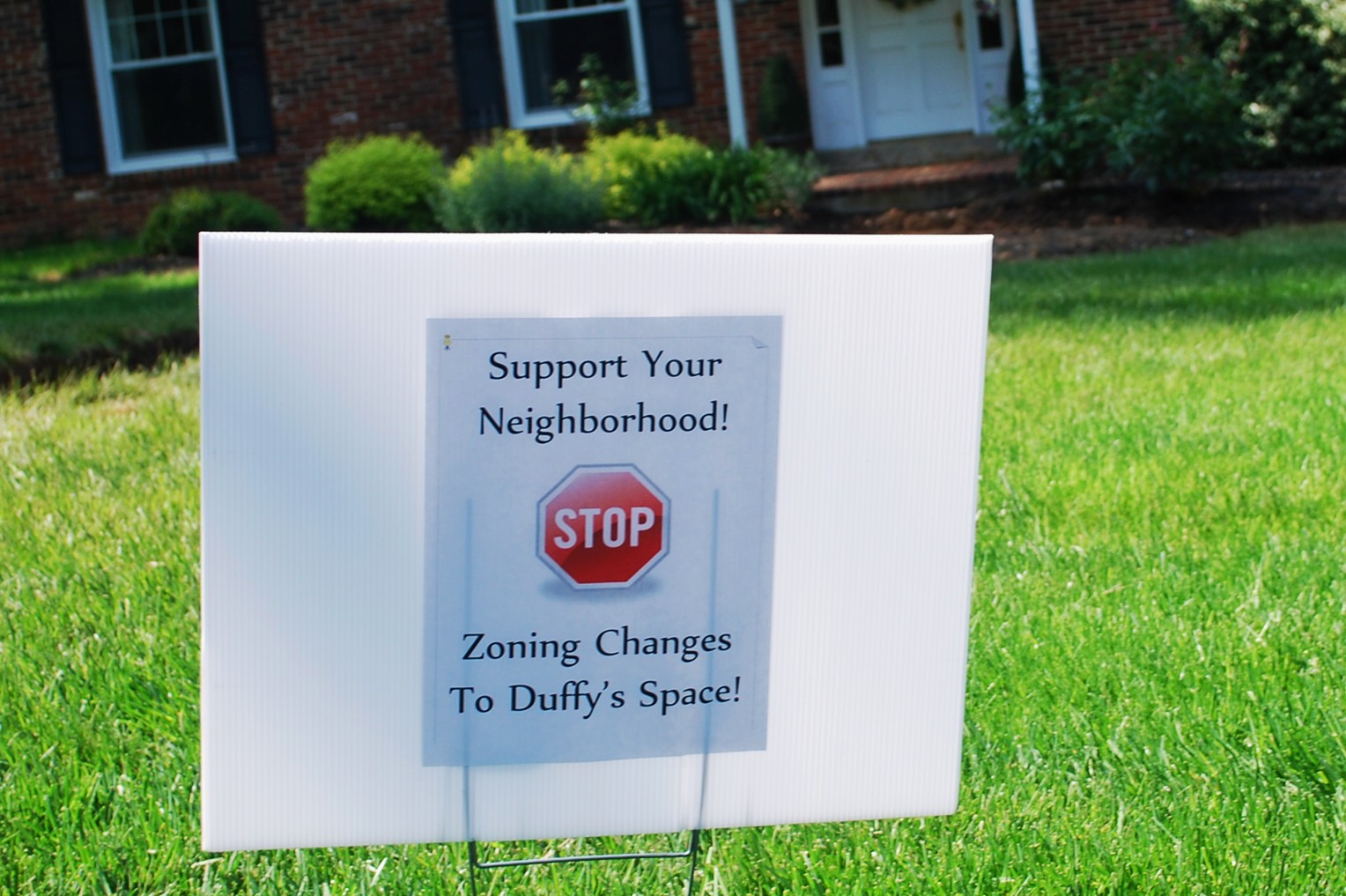
I’m talking about the old Duffy Catering site on Lancaster Ave. and the proposed assisted living facility. No land development plan has been ‘officially’ filed with the township, yet there are some appointed and elected officials who seemingly already have the facility built! Facts and the required process seemed to have been discarded in favor of what ‘some’ officials believe should be the desired outcome. In this case, that means change zoning to allow a developer to construct a multi-story assisted living facility on barely 1 acre of commercial property when current zoning only permits such use on 10 acres as an institutional overlay.

At first blush, a resident might think that building an assisted living facility on the old Duffy property on Route 30 is a good idea. Before knowing all the facts, I probably would have agreed that this sounds like a good use for the property. I’m not opposed to an assisted living facility in Tredyffrin Township and …, as long as an open and transparent process is followed, all questions are answered and no rules are changed or broken, such a project could have my complete support.

But unfortunately, that is not looking like the path that is being taken for this project. The Duffy property is a 2-acre site, with approximately 1-acre C-1 zoning and 1-acre R-1 zoning. (The R-1 parcel of the property was used by Duffy’s for parking). Current zoning does not permit an assisted living facility in C-1 or R-1 in Tredyffrin Township. Rather than taking the traditional path seeking either a variance or conditional use, the developer Ed Morris, through his attorney Denise Yarnoff have submitted a C-1 zoning ordinance amendment change, to allow assisted living as usage. (As I have previously stated on Community Matters, Planning Commission meeting minutes indicate that Yarnoff thought that seeking a variance would be too costly and too time-consuming for her client.)

The Tredyffrin Zoning Code addresses assisted living facilities in Institutional Overlay (IO) Zoning and includes 4 pages of restrictions and regulations, including residential density, bed density, acre requirements, buffers, setbacks, etc. Ms. Yarnoff reduces the pages of assisted living facility regulations in Tredyffrin Zoning Code to 1 sentence in her requested zoning ordinance amendment as follows:

“A residential care facility for older persons providing permanent residential accommodations and/or assisted living facilities/services (and supplemental services) as defined in the applicable Pennsylvania state statues, rules and regulations along with support services, which may include, but not limited to: personal health care and health care services, medical services, skilled nursing, community facilities, and congregate dining facilities”

I need to be very clear … this requested zoning ordinance amendment change is for all C-1 zoned property in Tredyffrin Township. The developer and some of our local officials would like to have it both ways. On one side, they refuse to admit that this requested zoning amendment change permitting assisted living facilities as a usage in C-1 zoning is ‘spot zoning’. But on the other hand, they would have us believe that there would be no plans for assisted living facilities in any other C-1 locations. Sorry, but I don’t think they can have it both ways.

For the record, ‘spot zoning’ as defined by Merriam-Webster Dictionary:

: the illegal singling out of a small parcel of land within the limits of an area zoned for particular uses and permitting other uses for that parcel for the special benefit of its owners and to the detriment of the other owners in the area and not as a part of a scheme to benefit the entire area.

I would love for someone to explain to me how changing zoning to suit a specific developer and his plan is not ‘spot zoning’ … looks to me like the Duffy assisted living project fits Webster’s definition!

The draft plan for this assisted living facility indicates a bed density of 93 beds on 1 acre. It is my understanding that this level of proposed 1-acre residential density for the Duffy property does not exist anywhere else in all of Chester County! It is also interesting to note, that changing C-1 to permit an assisted living facility usage also has not occurred in Chester County. Commercial zoning is for the regulations of goods and services not people; which is why assisted living facilities would typically be found in residential zoning code not in commercial zoning code.

Here’s something else — when Duffy’s was an operational catering business, the R-1 parking (non-conforming use of land for parking) was utilized. The developer’s plan for an assisted living facility on this site assumes the continued use of R-1 parking; a belief that this non-conforming parking use would be grandfathered in and therefore available for use in the proposed assisted living facility. A review of the Tredyffrin Zoning Code would indicate otherwise – see below:

ARTICLE XXIV

General Provisions

§208-99. Nonconforming buildings or uses.

Zoning, Chapter 208, page 108

D. Restoration. Building reconstruction to restore a building containing a nonconforming use shall commence within one year of the date the building was destroyed or condemned and shall be carried on without interruption.

[Amended 9-10-2007 by Ord. No. HR-360]

E. Discontinuance. If a nonconforming use of land or of a building ceases or is discontinued for a continuous period of one (1) year or more, subsequent use of such building or land shall be in conformity with the provisions of this chapter.

The Duffy property has sat vacant (and for sale) for at least 4 years, which means (according to Tredyffrin Zoning Code above) that the developer for this proposed assisted living facility cannot use the R-1 parcel for parking in his plan. Clearly exceeding the discontinued use of 1 year per the Tredyffrin Zoning Code, no grandfathering on the R-1 parking is permitted. We can add this to the list that makes this proposed assisted living facility at this particular location problematic. Or, is it possible that our elected officials may just ignore the township’s Zoning Code to accommodate the project?

We should not forget that two months ago, our supervisors voted to spend $100,000 for consultants to review the township’s existing commercial zoning and make recommendations. If the township is spending $100K for professional zoning advice, it would seem that there should be a moratorium on any zoning changes until the zoning expert has an opportunity review and weigh in. My guess is that setting precedent by changing C-1 zoning to include assisted living facilities without any regulations or restrictions would not be something that most zoning experts would think is a good idea. If an assisted living facility as a usage in C-1 zoning is so important, why wasn’t it included in the update of the township’s comprehensive plan completed just 3 years ago, in 2009?

Why is there such a sense of fait accompli among some of the appointed and elected officials in this township in regards to this project? The proposed assisted living project may have started out as a ‘not in my backyard’ (NIMBY) zoning battle between a Daylesford homeowner and a developer but now has many of us in the community asking questions. Perhaps originally only concerned for her backyard, Trisha Larkin, the Daylesford Neighborhood Association president is now taking a stand for her neighborhood and for the township.

Voicing strong opposition for the requested C-1 zoning change and the proposed assisted living facility, Trish states, “The DNA favors economic development where solid process is followed, and when it serves for the greater good of its residents. This proposal favors the developer and NOT our community or Tredyffrin Twp.!”

An online ipetition has been created to “Oppose Ordinance Amendment adding Assisted Living Facility use in Commercial (C-1) Zoning in Tredyffrin Township”. Changing C-1 zoning to include assisted living is not just a Daylesford neighborhood issue; it is a township wide change. If you would like to add your name to the petition, click here.

For some of the appointed and elected officials in this township, the requested C-1 zoning change to permit assisted living facilities may be a fait accompli, but for some residents, that decision may be far from over.

Again, I ask … what is the price tag for economic development in Tredyffrin Township?

 

Long Awaited Report from Tredyffrin Twp Business Development Advisory Council … Soon to be released

Because of increasing empty storefronts and vacant corporate buildings, I wrote a post fourteen months ago asking if there was anything that could be done to attract new businesses and stimulate long-term, stable, economic growth in our community. In the February 2, 2011 article, I said,

I wonder if a township business task force would help . . . a volunteer group of local retired executives, small business owners, and corporate representatives. The group would meet monthly with a mission to spearhead ways to improve existing relationships and provide assistance and a resource for township businesses. This important support group for the business community could provide regular updates and suggestions to the Board of Supervisors. Just an idea . . .

A couple of months after this article appeared in Community Matters, the Board of Supervisors approved the creation of a Tredyffrin Business Development Advisory Council in April 2011. Supervisors Michele Kichline, Phil Donohue and Mike Heaberg held meetings with local companies, real estate and leasing representatives, etc. and designed a model for this volunteer advisory group.

Following the establishment of the criteria, community members wishing to participate were asked to submit letters of interest for consideration. From the 20 applications received, six residents were chosen to serve on the advisory board including Dan Fishbein, VP of BNY Mellon; Eric Kleppe, Turner Investments; Stanford Nishikawa, junk-bond analysis and private investor; Jim Sanborn, Gen Manager, Interstate & Ocean Transport Company; John Susanin, SSHH Real Estate and Bill Thomsen, Urban Engineers. In my November 15, 2011 Community Matters post, I provided the announcement of the advisory group members and their mission,

“This group was chosen for its cross section of business, strategic, planning and marketing expertise. They are highly skilled citizens who do not currently serve on our boards and commissions and have agreed to take a critical look at all aspects of the Township that relate to business development and business retention. This includes, but is not limited to zoning, transportation and marketing.”

In addition to supervisors Kichline, Donahue, Heaberg, and the six citizens listed above, four community liaison members were named to assist the group – Tory Snyder, Planning Commission; Beth Brake and Donna Shipman, Community Affairs and Small Business; and to represent the Paoli Business community, Dave Rowland.

As explained last fall by the supervisors, the group would work together for 4-6 months and then present their findings, which were to include recommendations and suggestions. As follow-up to their public report, it was intended that a long-term business advisory group would be created. It was recently announced that the advisory group is completing their study and will present their report at the supervisors meeting on June 18. I look forward to their report and am hopeful that there will be some positive news. However, I was troubled to learn yesterday from one of the named liaisons to the group – Donna Shipman that she was never contacted by the advisory group nor was she asked to provide input. According to Donna, she contacted several supervisors to express her concern but there was no follow-up from the advisory group.

This information is concerning … was Donna’s experience as a liaison to this advisory group an isolated situation? Were the other three liaison members involved and part of the process? As they conducted their research, who in the community was contacted by the advisory group? Did they speak with members of the small business community, corporate and real estate representatives, the township staff? I believe that there was potential for the Business Development Advisory Council to make a difference in the community through outreach and research … did the group achieve their mission?

We are all interested in the revitalization of our community and the current economic climate presents unique challenges. The political influence of elected leadership is critical to helping communities stay the course toward a vibrant economic future. Dedicated leadership is needed to raise awareness, help develop and communicate a common vision and motivate the community into action. Our elected officials have opportunities every day to effect change and promote a strategic vision of economic growth for their community growth. Is this a priority of our elected officials and if so, how successful are they in meeting the objective?

At a friend’s suggestion, I recently spent some time driving and walking around downtown Malvern. By the way, I would encourage everyone to take the time and visit this place … talk about economic redevelopment! Wow. It is so exciting to see all the changes and development, including adaptive re-use of existing buildings and new construction, in their town center. As an example, the original old Malvern fire company building, off King Street, was restored and retrofitted for mixed-use; the lower level commercial and upper level residential condominiums. Brick walkways, Victorian light posts and flowering planters line the downtown area the length of King Street; a total renaissance is occurring in this small borough, next-door to the west of us.

I want what Malvern has managed to achieve, for ‘our’ community. Malvern, Phoenixville, Wayne, West Chester, Media – all these places are faced with similar economic issues as ‘us’, yet these places are moving ahead in spite of the challenges … so why can’t we?

Looking forward to the public report from Tredyffrin Township’s Business Development Advisory Council on June 18; I want to hear the group’s ideas and suggestions on ways to revitalize and stimulate economic growth in our community.

Proposed C1 Zoning Change in Tredyffrin to Accommodate Developer and Specific Project

A couple of weeks have passed since supervisor JD DiBuonaventuro held a town hall meeting for members of the Daylesford Neighborhood Association (DNA). Also attending the meeting were township manager Mimi Gleason, zoning officer Matt Bauman, supervisors DiBuonaventuro, Michelle Kichline and Kristen Mayock, and planning commissioners Bob O’Leary, Tory Snyder and Trip Lukens. Representing the proposed project were developer Ed Morris, Berwyn Real Estate L.P., Capital Health representative Gerard Farrell and attorney Denise Yarnoff. The focus for the meeting is a 93-bed assisted living facility proposed for the old Jimmy Duffy’s catering site on Lancaster Ave. in Daylesford. The property is 2.069 acres, containing 1.069 acres of C1 Commercial and 1 acre of R1 Residential property. Current zoning does not permit this usage.

The mid-May meeting follows other DNA meetings, planning commission meetings and Board of Supervisor meetings where the assisted living project was discussed. Attending most of the meetings, I have now decided this proposed project represents something more significant than simply a NIMBY (Not-in-My-Back-Yard) syndrome for a local neighborhood. Residents raised questions about the proposed project including traffic, density, lighting, trash collection to name a few. Although certainly important issues to those residents most affected, I was not entirely convinced that an assisted living facility was a bad idea. In an attempt to gain community support, the developer made concessions at the town hall meeting – the latest sketch plan reduced the number of floors, closed off the back exit to adjourning Pennsylvania Ave from the site, enclosed trash collection, etc.

My problem with the Jimmy Duffy redevelopment project has nothing to do with the specific project but rather, the way this project has seemingly been fast-tracked and given a green light to move forward. What do I mean? An assisted living facility is not currently on the list of permitted uses in the township’s C1 district. Because the current zoning does not permit an assisted living facility, traditionally a developer would seek either a variance or a conditional use for the project. When questioned at the October 2011 planning commission meeting as to why the applicant would not take this approach, attorney Denise Yarnoff responded that, “the process would delay the project, cause a financial burden, and not address all the project-related issues.”

If you are a developer and don’t want to see your proposed project bogged down by the time required to seek a variance or conditional use (and don’t want the additional cost this path would require) why not just get Tredyffrin Twp to change the zoning to accommodate your plans. Yes, that is exactly what has happened … an Ordinance Amendment draft to permit assisted living in C1 zoning was submitted by Yarnoff along with a $5,000 application fee. The ordinance amendment is scheduled for the Planning Commission’s July 19 meeting. In researching this situation, I have not been able to find any other project in the township in recent years where zoning usage was changed to accommodate a specific developer and specific project. What is it about this specific project or its developer that would warrant such special treatment by the township? I have no idea.

Anyone that is reading this post needs to recognize that this situation and the ramifications of the proposed zoning change is not just about the Daylesford assisted living project. Should the C1 zoning Ordinance Amendment continue down the green light path, the zoning change will permit assisted living in all C1 districts in the township. Should this ordinance amendment be approved, it means that a zoning change for a specific project, benefiting a specific developer will change the permitted uses for all C1 properties in Tredyffrin Township. So the next question is ‘why’ have a comprehensive plan?

According to the township website, the comprehensive plan “provides local officials with a highly effective planning tool that will support day-to-day decisions about future development so that they may be thoroughly rational and consistent …” I have to ask, is changing zoning to accommodate a specific project “rational” ? A comprehensive plan is in place to guide growth and development in an orderly manner … does changing zoning to accommodate a specific developer’s needs promote a fair and orderly process?

Beyond obvious concern that changing zoning for a specific project is precedent setting for the township, there’s something else. In April, the Board of Supervisors voted unanimously to spend $100,000 for a consultant to update commercial zoning regulations in the township. The consultant was hired to review the township’s existing commercial zoning and make recommendations. Would it not seem to make sense if the township (taxpayers) is spending $100K for professional zoning advice, there should be a moratorium on any zoning changes until after the expert presents his update? That is not to say that this assisted living project couldn’t move forward – the developer would just have to use either the variance or conditional use routes versus the zoning ordinance amendment change.

As follow-up to the town hall meeting, DNA president Trisha Larkin sent a series of questions to supervisor DiBuonaventuro in regards to the proposed assisted living project. A specific question and response from DiBuonaventuro caught my attention –

Larkin:
4. Why is there not a moratorium on commercial zoning (re-zoning) until the independent consultant comes back with some solid recommendations?

DiBuonaventuro:
This developer began talking to the Township last year, before a decision was made to begin work on the commercial zoning districts. The commercial zoning work is just beginning and will take another 18 months before it is completed. In fairness to the developer and to the bank that owns the property, a decision needs to be made one way or the other long before the completion of the commercial zoning work so the bank knows whether it should seek a different buyer.

Should the process for a land development project be based on what is ‘fair’ to a developer or the property’s owner (in this case Eagle Bank)? Or … should any proposed land development project be based on what is ‘fair’ to the community and its residents? Zoning decisions must be policed both from the top-down and from the bottom-up, using processes that encourage neighborhood residents to participate actively in decision-making. Citizen participation both gives voice to the interests of neighborhood residents and provides the most effective safeguard against corruption of the zoning process.

The rationale behind municipal zoning power is that effective land use planning is necessary to promote and protect the interests of the entire community. Those making land development decisions need to create the community that we, the residents, want.

I am going to be very curious to see how the assisted living project plays out … will the draft C1 ordinance amendment, as provided by the developer’s attorney, win the approval of the Planning Commissioners and go on to the Board of Supervisors for their final approval? Will DNA residents continue to voice their concerns over the project? Will other township residents view zoning changes to suit a specific project or to accommodate a particular developer as setting precedence … and therefore, worthy of further discussion?

Stay tuned; the outcome on this proposed zoning change may mean a new era for development in Tredyffrin Township.

Jimmy Duffy’s Redevelopment Plan Requires Zoning Change … Is There Community Support?

UPDATE May 8, 2012: According to the township zoning officer, Matt Bauman, the Jimmy Duffy property is not 2 acres C-1 Commercial and .3 acres R-1 Residential as was stated by Ed Morris, the developer for the proposed project.

The property is a total of 2.069 acres containing 1.069 acres of C-1 Commercial and 1 acre of R-1 Residential. If the commercially zoned part of the site was 2 acres as previously stated, the developer could probably just ask to change the C-1 zoning. But now it appears that Morris would need to ask for variance on both the C-1 and R-1 sections.

Taking the ‘amending the C-1 Commercial ordinance route’ to include assisted care facility would suggest that it is OK to construct this type of structure on 1 acre rather than the 10 acre minimum as is currently required under IO Institutional Overlay zoning district. The Jimmy Duffy property actually only contains 10% of the property currently required for an assisted care facility.

————————————————————————————————————————————————-

It has been 2-1/2 months since the players in the Jimmy Duffy’s redevelopment project last met publicly … but this Wednesday, May 9, 7 PM at the Tredyffrin Township Building, they will take up where they left off with a town hall meeting. What’s changed with the proposed plans for a multi-story assisted care facility? I don’t know if any of the plans have changed from the developers-side; it’s more about the fact-finding that has occurred with the Daylesford neighbors. I will get to that, but first here is the abbreviated history on the project.

The decaying catering facility that once housed Jimmy Duffy’s is on Lancaster Avenue in Daylesford. The 2.3-acre property is wedged between the Paoli Vetcare (the 2 properties share a parking lot) and a large new office building. On and off over the years, the property has seen its share of redevelopment interest but most notably the 2006 proposed Arc Wheeler townhouse community. That proposal, ‘Station Square’, called for the teardown of 14 single-family homes (in addition to Duffy’s) and the construction of 150+ residential units and retail space. With much backlash from the neighboring Daylesford homeowners and many heated discussions, the developer eventually decided against further pursuit of that project.

Several years passed without any new suggestions for the Duffy site until last fall. In September 2011, Capital Health Service and the project’s developer Ed Morris, presented sketch plans to Tredyffrin’s Planning Commission to redevelop the property as a multi-story assisted living facility. Planning Commission minutes from September and October 2011, and January 2012 Board of Supervisors meeting minutes reference the discussion. Here’s the sticky wicket for Capital Health and Ed Morris – the 2.3 acre Duffy property consists of 2 acres of C-1 zoning and .3 ac of R-1 zoning. The C-1 Commercial District does not permit an assisted care facility as a usage; nor does R-1 Residential District.

The township does have zoning that permits residential care facilities – Institutional Overlay (IO) but the proposed Jimmy Duffy project would not comply with this ordinance – why? The answer: An IO zoning district requires a minimum of 10 acres and the Jimmy Duffy site has 2 acres. The applicant for the project could ask for a variance to the IO zoning, but 2 acres is not exactly close to minimum 10-acre requirement. Under these conditions, would the township Zoning Hearing Board grant this type of variance request? My guess is that Capital Health Service and Ed Morris figured that their best shot at getting this project approved was to have the C-1 zoning district amended to include an assisted care facility as an acceptable use.

According to the January 2012 Board of Supervisors minutes, “The developer [Ed Morris] is drafting the language as qualified by the Planning Commission for the proposed amendment to the C1 zoning district that is under consideration by the Planning Commission at this time.” The minutes from the Planning Commission and the Board of Supervisors meetings, give the impression that the Daylesford neighbors were contacted and that their response favorable to the project. This is probably why Ed Morris et al received the green light to draft language for a zoning amendment change.

What’s the saying, the devil is in the details. At the February 23 public meeting between the Daylesford Neighbors Association (DNA), Capital Health Service representatives and Ed Morris, the detail that the project’s success hinged on a zoning ordinance amendment change was not an obvious part of the discussion. The Daylesford neighbors focused their concerns on the height of the proposed building, lighting, traffic, trash, etc. but most attendees missed the greater issue – that a residential care facility was not permitted in C-1 zoning and that there was not sufficient property for IO zoning (remember, IO requires 10 acres and there’s only 2.3). I admit that like the Daylesford neighbors, I too missed (or overlooked) the significance of what this project would require … the zoning amendment change. To say that the developer’s discussion at the February 23 meeting was ‘incomplete’ would be an understatement.

Fast forward since February and DNA residents have gone on a fact-finding mission to educate themselves on local zoning ordinances, C-1 Commercial, R-1 Residential, IO Institutional Overlay districts, conditional use and variances. As a result, I think that the developer would better serve the neighbors if there were a full and fair presentation of the project at Wednesday’s meeting. Ed Morris should come prepared to explain why the township should grant a C-1 zoning amendment change to include assisted care facility when the township already has the IO ordinance that includes this usage. At 2.3 acres, the Jimmy Duffy property is off by an order of magnitude to meet the IO requirement of 10-acre minimum for this type of project.

Simply stated, the proposed Jimmy Duffy redevelopment project does not match up to the requirements of IO Institutional Overlay zoning requirements and is not currently included in C-1 use regulations.

If the township allows a developer to draft a C-1 Commercial ordinance amendment to fit his specific project, what does that say for future developers in Tredyffrin? Will they too be afforded that same opportunity? It is important for the community to encourage local economic development and redevelopment. However, if a proposed project requires a zoning ordinance amendment, I ask for careful and thorough analysis. Although Wednesday’s town hall meeting is intended for those directly involved in the Jimmy Duffy redevelopment project (Daylesford neighbors, Capital Health Service representatives and the developer, Ed Morris), the ramifications of the actions taken in regards to this project are far-reaching for all future township development.

———————————————————————————————————–

Trisha Larkin, President of Daylesford Neighborhood Association (DNA) and her neighbors are circulating a “Petition to Oppose Ed Morris Proposal for Assisted Living Facility on Duffy Site”. Click here for copy of petition. According to the petition, the neighborhood members further state that “DNA opposes any FUTURE proposals that require zoning changes” for the Jimmy Duffy property.

Need Jobs Now!

What’s the saying, ‘a picture is worth a thousand words’?

As I drove along Swedesford Road to Wegmans a few days ago, I actually did a u-turn in the middle of the road … not quite believing what I saw. In the median strip on Swedesford Road in the shadow of the Great Valley Corporate Center and its mega-commercial buildings, were these two gentlemen holding ‘need help’ signs. I stopped the car to chat with them – both were out-of-work, one for 2-1/2 years, the other for 18 months. One was a union carpenter but explained that his local union had no work for him and he was managing by living off odd jobs. The other man, a veteran, explained that he had lost his family and his house since losing his job.

They said they generally came to this location in the morning during the work week, hoping that someone would offer them a job (even a few hours of work) or donate food or money. As if on cue, a well-dressed young may stopped his car and came over to us – giving each man a bag of food from a local carry-out. Aside from a polite thank you, no other words were exchanged, leaving me with the impression that this was not the first time this young man stopped to offer the men lunch.

I asked why did they choose this particular location and they said they thought it was important to serve as a reminder to the local corporate center workers, that they themselves were but ‘one paycheck away from a similar situation’. I asked them who they blamed — their response, “the government” … adding that “nobody cares”.

This photo serves as a reminder that unemployment and the job crisis is no longer ‘somewhere else’ — it’s right here in our backyard — Pennsylvania … Chester County … Tredyffrin Township! In the coming months between now and November, I want to hear some real ideas about how to get people back to work in this country. And that includes jobs for people in Chester County.


A Review of Radnor Twp School District’s Teachers Contract … Will the Results Help T/E Teachers?

The following Community Matters post, “Signed, Sealed and Delivered … Radnor Twp School District & Teachers Union Ink 3-year Contract with Salary Increase … Is there handwriting on the wall for T/E Teachers?” is from March 23, 2011.

A year ago, the Radnor Township School District signed a 3-year contract with their teachers union( RTEA) that was surprising, given the economic situation of the times. Fast forward to 2012, and T/E is in the midst of their own contract negotiations. This post and the attached comments from a year ago, make for an interesting commentary to compare and contrast where we are in our own teacher negotiation process. Can we learn anything from the decisions of our neighboring school district?

——————————————————————————————————————————————————-

“Signed, Sealed and Delivered … Radnor Twp School District & Teachers Union Ink 3-year Contract with Salary Increase … Is there handwriting on the wall for T/E Teachers?”
~ Community Matters, March 23, 2011

It is now official, Radnor Township School District and the teachers union, Radnor Township Education Association (RTEA) have voted to approve three-year contract, September 1, 2010 – August 31, 2013. Below are some of the highlights of the contract.

Salary Highlights:
Salary freeze September 1, 2010 – March 3, 2011 (6 months)

Year One Salary:

  • No step movement
  • Average pay increase after freeze: 1.57%
  • Top salary step remains at current level
  • Average lump-sum payment for top salary step: $749

Year Two Salary:

  • RTEA members move to next step
  • Average pay increase: 3.26%
  • Top salary step remains at current level
  • Average lump-sum payment for top salary step: $1,206

Year Three Salary:

  • RTEA members move to next step
  • Modest increase to top salary step
  • Average pay increase: 2.66%

Health Benefits Highlights:

  • RTEA members agreed to significant increase in the cost of health insurance
  • Stating March 4, 2011, teachers move from fixed contribution to a percentage-based contribution
  • Year One – salary contribution 0.75% – 1.5%
  • Year Two – health care plan changes from Blue Cross to lesser premium-cost plan, with increase co-pays doctor and hospital visits (salary contribution 0.85% – 1.5%)
  • Year Three – salary contribution 0.95% – 1.65%

Retirement Option:

  • Eligible teachers will receive a one-time retirement payment from $25K – $50K (depending on number of retirees). The retirement option is in effect for limited time to allow district to reduce payroll.

OK, so looking at the contract inked between the Radnor Township School District and RTEA, is the handwriting on the wall for T/E School District? So much for Gov. Corbett’s recommendation for a one-year freeze . . . Radnor’s teacher union only agreed to a 6-month freeze. However, after the 6-month salary freeze, the teacher union pulled off 7.5% salary increase for the following 2 ½ years of the contract.

Remember, if a teacher qualifies for a step increase, his or her salary increase would actually be higher than the average yearly salary increase. Radnor’s teachers contract is remarkable given today’s economy and budget shortfalls!

Community Matters © 2025 Frontier Theme