
Pattye Benson

Community Matters

TESD

NRA Statement: “The only way to stop a bad guy with a gun is a good guy with a gun”

In advance of today’s statement, The National Rifle Association stated that the organization would offer “meaningful contributions to help make sure that this never happens again.” In the wake of the Newtown, Connecticut tragedy, I was hopeful that the NRA would nudge national laws toward making it hard to gain access to some semi-automatic weapons, such as the one used last week. I was hopeful that the horror of Sandy Hook Elementary might trigger a change in the NRA’s policy toward gun control.

Unfortunately, the olive branch of compromise was not what the NRA had in mind. The NRA broke their week-long silence with a statement read by NRA CEO Wayne LaPierre that calls for guns at every school in America. While the President is calling on Congress to act on gun control legislation, LaPierre believes that the only effective way to protect our schoolchildren is with “properly trained armed good guys”.

Echoing the sentiments of some Community Matters commentators, LaPierre said, “The only thing that stops a bad guy with a gun is a good guy with a gun” adding, “Would you rather have your 911 call bring a good guy with a gun from a mile away … or a minute away?” Others have argued on Community Matters, that rather than banning guns, the government should be arming teachers and administrators in schools so that they can defend students in the event of another school shooting.

LaPierre’s words scoffed at the notion that banning semi-automatic weapons or enacting gun control laws could stop school violence. Instead, he cast blame for gun violence in schools on the violence of video games and movies.

The NRA statement did nothing to address the problem of the availability of assault weapons and high-capacity ammunition magazines. Although the weapons used by the shooter at Sandy Hook Elementary were legal, one-third or more of gun sales remain unregulated in the secondary market, which includes not only the gun show loophole but also private sales between individuals. NRA … why not address establishing a system of comprehensive background checks for gun purchasers?

The spirits of the twenty children killed last week will haunt us all this holiday season. It is unbelievable that the NRA’s response to the Sandy Hill tragedy is to arm more Americans. According to the NRA, the most effective way to protect against another horror like last week’s school shooting is … more guns.

The NRA’s failure to consider any meaningful gun regulations is offensive and is no way to honor the memories of the twenty-eight lives lost last week.

————————————————————————————-

A couple of related gun and school safety items:

Alan Thomas, Main Line Media News, spoke with Tredyffrin’s Police Superintendent Tony Giaimo on the procedure for turning in a gun to the police department, read ‘Turning in a gun, how it’s done” for details. According to Giaimo, to date for 2012, there have been 6 guns turned in, none of which were assault weapons.

In response to the Sandy Hook tragedy, the T/E School District has scheduled a ‘Community Meeting on School Safety’ for Wednesday, January 9, 2013, 7 PM at the Valley Forge Middle School auditorium. The meeting will feature a panel of experienced safety experts including representatives from the Tredyffrin and Easttown police departments, District building architects and representatives from the District Safety Committee.

TESD Superintendent Dr. Waters Safety Response Letter

In response to the Sandy Hook tragedy, TESD Superintendent Dr. Dan Waters has released the following ‘Safety Response Letter’ . For those not on the District’s distribution list, I wanted to share the District’s response plan for emergencies and Dr. Water’s assuring words to the community.


Safety Response Letter from Dr. Waters

Dear T/E Parents and Guardians,

School violence in our country touches all of us. Friday’s tragedy in Connecticut evokes sorrow and disbelief. Our thoughts remain with the entire Newtown community as they deal with this tragedy.

Immediately upon learning about the incident at Sandy Hook, principals were contacted to ensure everyone was aware of the situation and had staff in place to respond to questions and concerns at the building level. Since Friday, the District has implemented elements of its response plan, including the following:

  • Counselors are available to students should they have needs in processing the events of this tragedy.
  • Principals have reviewed with the staff techniques to discuss Friday’s events in an age-appropriate manner.
  • School officials have talked with Tredyffrin Township’s Superintendent of Police Anthony Giaimo and Easttown Township’s Chief of Police David Obzud to increase police visibility in school parking lots in the coming days and to review existing school security plans.
  • Principals have reviewed emergency response procedures with all staff members.
  • District officials have notified the public of District actions via the TESD website.
  • District staff have posted web resources for parents regarding the support of their children.

Ongoing procedures are in place to promote safe schools including these measures:

  • All school doors are locked following the arrival of students with the exception of the main entrances, which are staffed by lobby monitors. This entrance procedure is reviewed by the District Safety Committee.
  • Any visitor entering a T/E School must have a legitimate reason for visiting and must register with the office or lobby monitor and be required to wear a visitor’s badge while in the building.
  • Staff members in all schools are instructed to alert the office in the event of unusual or suspicious circumstances.
  • The T/E School District has a collaborative relationship with local police who are readily available in the event of an emergency. The police review school emergency plans and conduct drills on a regular basis.
  • Staff and students practice emergency evacuation and lockdown procedures at regular intervals.

The District’s safety protocols are regularly reviewed by the District’s Safety Committee. The Committee is comprised of District and community members including police representation from both townships. An Emergency Response Plan has been developed by the Committee and disseminated to all staff members for implementation. The District has been advised by police authorities to refrain from making the details of the plan public for security reasons. General elements of the plan include the following:

  • Building evacuation drill procedures
  • Lockdown drill procedures
  • Bus evacuation drills
  • A plan for sequestering students in the school buildings or another safe place
  • A communications system to notify parents of the evacuation of students and to alert the whole school community when required
  • Instruction of students in emergency preparedness
  • An emergency notification system for staff to make appropriate administrative personnel aware of any emergency
  • On-going collaboration with local agencies, such as the police department, fire department and emergency management agencies to review and update existing plans
  • Instruction of staff members in the techniques for handling emergencies

The District website has a link on the home page for assisting parents on how to talk to children about tragic events. In January, the District Safety Committee will review the safety plan and make modifications, if required. In addition, the District will continue to meet with local police and emergency officials to solicit input on safety procedures and to implement recommended enhancements.

In the meantime, children need stability. Research advises that the maintenance of routine conveys to students a sense of safety and security. Tragedies such as the events in Newtown strike at the core of the entire community. As always we value our partnership with you. Together we can continue to reassure your children that plans for their safety and security are in place at school.

Sincerely,

Dan Waters

Superintendent of Schools

TESD 2013/14 budget discussions underway; including outsourcing of services

Ray Clarke attended last night’s TESD Finance Committee meeting and provided his notes from the meeting.

Reading over Ray’s notes, it appears that members of TENIG (Tredyffrin Easttown Non-Instructional Group) are once again going to find themselves front and center for the 2013/14 budget discussion. In prior years, it often looked like the TENIG custodians were the target in the school district’s budget woes. Privatization through outsourcing was seen by some as a way to preserve the classroom and its programming, but at what cost?

Outsourcing services that historically have been in-house functions with long-time employees is a major shift in institutional culture. How does the possible cost savings of outsourcing compare to the quality of job performance and productivity? How does one measure the safety factor that comes with the connection that current custodians have developed with the schools and the students? It is difficult to measure the ‘safety’ intangible to in-house custodial services, plus many of the employees live in T/E and their families are part of the community.

For the 2012/13 school year, the custodial workers offered a 10% reduction in their salaries and they did not take the 4.5% increase, which were contained in their existing contracts. In real dollars, the cost savings to the District was $197K in salary reduction, plus the additional percentage contractual savings for a total savings of approximately $285K. By giving back, TENIG’s custodial workers helped the 2012/13 budget and the additional bonus of saving local jobs.

Beyond the custodial workers, it looks like all of TENIG will be under the microscope for possible outsourcing in the 2013/14 budget. The plan is for separate RFPs for each of the various TENIG job functions – security, kitchen, clerical, etc. in addition to the custodial workers. The possible outsourcing of TENIG workers is still in the early stages of the budget process,

The following are Ray Clarke’s notes, along with his thoughts from the Finance Committee Meeting, 12/10/12:

The main topic of Monday’s Finance Committee meeting was the 2013/14 budget, in preparation for the January 7th Board vote on whether to apply for Exceptions.

The basic discussion framework is the projection model we’ve seen before, based off an estimate for the actual current year results. Since this 2012/13 estimate drives every out-year, its accuracy is critical – yet the numbers do not inspire confidence.

Total 2012/13 expenses are estimated at $107.8 million, $2.5 million less than the budget. The difference is driven by $1.5 million lower benefits cost (estimated by our benefits consultant), $0.4 million from the new TEEA contract plans, and $0.5 million net salary savings from “breakage” offset by 3 additional FTEs. So the year’s imbalance turns from negative to positive, which is the good news.

However, expenses are still $6.1 million (6%) higher than the year just completed. No-one at the meeting was able to provide a breakdown of this increase. I think that the PSERS increase is about $2 million of the number. Where’s the other $4 million going?

One clue might be that the total healthcare and benefits expense for the following year is projected in the model to be flat (0% increase), based again on the consultant advice. Could it be that this year’s expense is overstated in the model? I don’t think this can explain the whole $4 million, though.

So, it’s hard to put much faith in the projected 2013/14 imbalance of $2.8 million as a basis for discussion of next year’s tax rates. Moreover, this number also includes the one time TEEA bonus ($1.1 million?), which should not be built into the tax base.

It hardly seems worth spending much time on the model for the years beyond 2013/14, except to note that refinements in the current version include:

  • Total healthcare costs increasing at 9% per year (previously 10%, 15%)
  • Special Education costs split from “other”, and projected to grow at 7-10%, vs 2-3% for other
  • PSERS expense will increase by $1.4 million next year, then $1.1 million, then $1.2 million, and then level off.
  • An additional 6.2 teachers are projected to be needed next year to meet enrollment growth

A number of “budget impact items” were listed but not quantified. On the saving side, these include outsourcing not only TENIG functions, but also aides and para-educators. Each TENIG job function would be bid separately in an RFP which would, for example, allow discretion to select a supplier that met standards for benefits. I didn’t catch how the educational staff “out-sourcing” would work, but I gathered that it would allow the district to avoid the PSERS expense. On the increase side, the topic of adjustments (in base salary or one time) for non-contract employees is on the table.

Bottom line: we are clearly going into the next budget cycle with a smaller problem than in previous years (no contracted near double digit compensation increases). At the same time, though, we seem to have been lulled into being much less prepared and thence likely to vote for an Exception application with information even more imperfect than it needs to be. (Yes, Exceptions don’t have to be levied if approved ……) .

Separately, at the beginning of the meeting, Chair Fadem asked for the financials to be presented as more of a “vanilla” summary. Not sure that’s the direction the district should be going in.

Will Tredyffrin Township’s Proposed 2013 Budget increase or decrease level of staffing in Police Department?

The consulting firm, International City/County Management Association (ICMA) has completed their operations review and data analysis of the Police Department; click here to read the detailed 92-page report. The agenda for Monday’s Board of Supervisors meeting includes a presentation of the ICMA Police Operations Report.

As reference, the Board of Supervisors approved this $49K police operations study in July. Before approving the study, there was discussion from some of the supervisors about whether the money would be better spent on bringing the police officer staffing up to the authorized level of 47 (currently at 41) or using the money for Police Department equipment.

Will the ICMA report influence the proposed 2013 preliminary budget or have a bearing on the ongoing police contract arbitration? Probably the most important question that many of us wanted answered by the consultant’s study – How many police officers are required in Tredyffrin Township to provide adequate safety for the residents? Did the study suggest increasing the department beyond the authorized level of 47 or would the recommendation be to decrease the staffing level?

The ICMA police operations study concludes that a minimum of two additional police officers needed to be immediately hired and assigned to patrol. According to the report, the consultants were informed that two officers have been authorized, increasing the level to 43 police officers.

The ICMA report recommends the Police Department take immediate steps to review the current shift schedule and consider the alternative 10-hour and 40-minute shift schedule, see ‘Patrol Personnel, Shifts and Shift Strength, Four-Shift Model’ on pages 79/80. According to the report, this new schedule can reduce patrol over-staffing; thus decreasing personnel requirements. However, the report notes that changing the shift schedule may be limited by the Police Department’s collective bargaining agreement. By modifying the current schedule, ICMA suggests there would be a reduction in the department’s need for patrol personnel.

According to the report, the current shift schedule provides a “total of six overlap hours during every 24-hour period. In other words, for six hours each day, two shifts (or approximately eight patrol officers) are scheduled to be working at the same time. The data analysis portion of this report confirms this. As stated elsewhere, these hours can be used for training and other purposes, such as participation in the department’s physical fitness program. But as the data analysis indicates, this dramatic increase in manpower suggests some inefficiencies that are built directly into the shift schedule.”

ICMA claims that the alternative schedule, which uses four starting times for shifts each day instead of three, will provide for greater flexibility, “both in terms of varying start times and in aligning manpower with calls for service.” By making this change in scheduling, the report indicates a reduction in supervisory staffing requirement. As I understand the report, if the Police Department were to move to the alternative 10-hour and 40-minute shift schedule, the standard of service to the community would be maintained with 43 officers (implying that the additional 4 authorized staffing vacancies would not be filled). However, the report points out that if the schedule is not changed, it may require the staffing level to increase to 45. Currently the Police Department has authorized staffing for 47 officers – my read is that ICMA does not recommend filling those two additional vacancies.

The current breakdown of the 41 members* of the Police Department are as follows:

  • 1 superintendent
  • 2 lieutenants (operations and administration)
  • 8 sergeants (6 assigned to patrol, 1 detective sergeant and 1 traffic sergeant)
  • 6 detectives (1 assigned to patrol)
  • 7 corporals (6 assigned to patrol, 1 assigned to traffic)
  • 1 community policing officer
  • 16 police officers

*My understanding from reading the report is that an additional two police officers has been approved and these officers will be assigned to patrol, bringing the total to 43 officers. The additional two officers will help reduce the overtime expenditures.

It makes sense that the reduction in Police Department staffing directly affects overtime expenses. With vacancies of six police officers (47 authorized down to 41), the report provides overtime data that underscores the additional overtime expense. The Police Department’s overtime costs in 2009: $55,175; 2010: $66,231; 2011: $144,037 and up to August 15, 2012: $138,914. Overtime expenditures in the first 8 months of 2012 were nearly as much as all of 2011 and clearly the overtime costs will continue to rise until the end of the year.

Will the recommendations contained in ICMA’s study have any effect on the township’s proposed 2013 preliminary budget? In reviewing the proposed 2013 budget, the actual level of police staffing is not obvious. Does the proposed 2013 budget allow the Police Department to increase staffing to its authorized level of 47? We should remember that the authorized level of 47 police officers is actually a decrease from previous years — at some point in the past, the Police Department had 50+ officers.

As it now stands, the proposed 2013 preliminary budget includes a 5.5% tax increase with the $40M unfunded medical liability dark cloud hanging over the township. In addition, the ‘elephant in the room’ is the ongoing contract negotiations between the township and the police union, Tredyffrin Township Police Association (TTPA). Since January 2012, the contract between TTPA and Tredyffrin Township has been in arbitration; the 3-year police contract expired the end of 2011. The process has been held captive for nearly a year, waiting for a ruling from independent arbitrator, Michael Zobrak.

Because of the comments on my post, “Lifetime healthcare benefits of Tredyffrin Township Police Association result in $40M unfunded liability – What’s the solution?“, I filed a ‘right-to-know’ request with the township. I received copies of TTPA 2004 and 2009-11 contracts. Until a new contract is signed, the Police Department continues to work to their last contract, 2009-11. The starting point for the collective bargaining agreement is with the 2009-11 contract; therefore, my comments below are taken from that contract. (Click here to review TTPA-Tredyffrin Township 2009-11 contract).

Without a copy of the police contract, there was conflicting information and questions, much having to do with the medical coverage of retired police officers. Here are the facts according to the 2009-11 contract:

  • For officers (and their spouses/dependents) hired prior to 1/1/99 who retire after 15 years of service, medical coverage is provided without cost, except for co-pays and deductibles.
  • For officers (and their spouses/dependents) hired after 1/1/99, who retire after 20 years of service, the township shall pay the premiums for medical coverage in the amount of 4% multiplied by the officer’s years of service. An example given: 4% x 20 years of credited service = 80% premium payment.

According to the 2009-11 contract, if an officer retired on or after 1/1/2009, the township may coordinate its obligation to provide post-retirement medical coverage with available Medicare coverage. “For those persons eligible for Medicare, the township shall reimburse them for any cost associated with acquiring Medicare, including the cost of Plan B coverage. In addition to being responsible for all costs associated with Medicare coverage, the township shall purchase supplement insurance and the township shall self-insure such as is necessary to provide the retired officer and spouse with the same level of insurance coverage they enjoyed before coverage was coordinated with Medicare.”

It was my understanding from the budget meeting, that retired police officers received lifetime health care benefits; however that point was debated on Community Matters. Reading further in the contract, it states that, “… Officers who retired prior to 1/1/09, as well as their spouses and eligible dependents, shall be permanently vested with, and continue to enjoy, the same level of healthcare benefits being provided for them by the Township as of 12/31/2008 at no cost, except for co-payments and deductibles then in effect.”

The missing link in the discussion was the 1/1/2009 date and whether the police officer retired before or after that date determines the medical coverage. Until I read the contract, I did not know the requirement for retirement was 15 years of service before 1/1/99; after that date, it became 20 years of service. I had incorrectly assumed that retirement benefits required 25 years of service.

For those police officers currently employed by the township, the township pays the entire medical premium for police officers, including spouse and children, with officers paying co-pays and deductibles. Benefits also include dental and vision coverage.

Another question previously raised was the longevity bonus pay of the police officers and how it was calculated. According to the contract, the bonus is computed as follows:

  • After 4 years of service 2% of Basic Yearly Salary
  • After 8 years of service 4% of Basic Yearly Salary
  • After 12 years of service 6% of Basic Yearly Salary
  • After 16 years of service 8% of Basic Yearly Salary
  • After 20 years of service 10% of Basic Yearly Salary

The biggest roadblock in collective bargaining contract disputes these days is health care benefits (in addition to salaries). Certainly health care benefits were an important component in the recently settled T/E teacher contract negotiations. Appreciating the current economic environment, the teachers agreed that their generous healthcare plan of the past was no longer possible, changes were made in their teacher’s contract accordingly. At present, there are 52 retired police officers and their families that are receiving retirement medical benefits. According to the 2009-11 contract, it appears that police officers retiring before 1/1/2009 are not required to go on Medicare when eligible. It would be interesting to know how many of the retired 52 officers have opted to go on Medicare benefits (even those not required to do so) when they became eligible.

As the T/E School District’s contract with the teachers union is a public document so is the Tredyffrin Township Police Association contract with the township. Some in the community have voiced concern with residents speculating about the contents of the police contact. I am of the opinion that as the T/E School Board has the TTEA contract available on their website, www.tesd.net, the township should likewise provide the TTPA contract on the website. Providing the public documents to the residents lessons the confusion and misinformation that comes about by not know the facts.

I look forward to your comments on ICMA’s report reviewing the Police Department and the 2009-11 agreement between TTPA and the township. Monday, December 3 Board of Supervisors meeting includes the proposed 2013 preliminary budget and the ICMA police operations report on the agenda.
T/E School District: Surplus $3.9 Million in 2011/12

Ray Clarke attended T/E School District Finance Committee on Monday night and provided his notes for Community Matters readers. After reading his notes, I spoke with Ray for clarification as I could not quite believe what I was reading. The 2011/12 actual expenses of the T/E School District were $5.5 million less than the District forecasted in June 2012. The District revenues were also less than the June 2012 forecast. Factor in the reduced expenses and reduced revenues and the District has a surplus of $3.9 million in 2011/12. Wow!

How could it be that the District financial forecast was off by nearly $4 million! We knew that the change in the medical insurance would be a cost savings but it is surprising that the surplus was so significant. The District has added the $3.9 Million to the General Fund Balance.

Ray’s Finance Committee Notes:

Monday’s Finance Committee meeting was most notable for a review of the full year 2011/12 finances in conjunction with a presentation of the draft audit. It turns out that a number of things broke in favor of the district.

The table below compares the forecast for the full year 2011/12 when 2012/13 budget was approved in June with the actual outcome and with the 2012/13 budget (figures in $ million, rounded)

11/12 Forecast 11/12 Actual 12/13 Budget

Revenues 106.4 105.6 109.2

Expenditures 107.2 101.7 110.3

Budget Imbalance (0.8) 3.9 (1.1)

So, expenses for the year to June 2012 turned out to be $5.5 million less than forecast in June 2012. (And about that amount less than budget).

Administration provided detail of the major drivers of the saving versus budget:

  • Lower Healthcare benefits: $1.8 million
  • Fewer teachers: $0.4
  • Lower tuition reimbursement: $0.3
  • Less natural gas usage: $0.4
  • Transportation savings: $0.3
  • “Breakage” $0.8
  • Other salary savings: $0.3

Total $4.3

“Breakage” is cost saving due to unexpected retirements, resignations, etc.; replacements are likely lower cost and there can be interim cost savings.

Clearly the final benefits accounting takes a while, but it seems quite likely that the 2012/13 budget and associated tax increase might have been predicated to at least some extent on an artificially high baseline. As Neal Colligan pointed out to me, there needs to be strict oversight to ensure that the current year expenses do not inflate by a whopping $8.6 million to the budgeted $110.3 million.

The $3.9 million surplus goes into the now ~$25 million general fund balance, with the $1.8 million benefits saving planned to be committed to medical plan rate stabilization and the remainder to the ever-open PSERS rate stabilization fund. On that score, it was announced that there’s a new GASB requirement that in 2015 districts must recognize on their balance sheet their share of the $27 billion unfunded PSERS liability. (Perhaps someone can work this out for TE, based, say, on TE’s % of teachers and a 50% share of the liability?). [Note also that in the year to June 2012 PSERS returned 3.4% compared to the 7.5% built into the system’s accounting used to calculate that $27 billion].

And this continues on to the 2013/14 budget, which will be rolled out at the next Finance Committee meeting on December 10th. It looks like we need to step up efforts to ensure that votes for tax increases are based on realistic projections.

On other matters, the Board continues with plans to harass tax-exempt non-profits. An outside attorney is being used to review and identify property owners that will be sent a letter and questionnaire to confirm tax exempt property use in the light of changes in the state law. This letter and questionnaire will be discussed at the January Finance Committee. The Committee has already determined that the a large percentage of the total are parcels owned by government entities (like the district itself) and for rights of way. Also, the district is planning to extend for six years the transportation agreement with Krapf; as presented, the terms looked reasonable.

T/E School District and Teachers Sign New 2-Year Contract

After 9 long months, the T/E School Board approved a new 2-year (2012-13 and 2013-14) contract between TESD and T/E Education Association last night. To read the contract summary of the teacher’s contract, click here. If you prefer to read the entire contract, click here.

Ray Clarke attended the Special Meeting of the School Board and the Finance Committee meeting which directly followed. In his review of the teacher’s 2-year contract, I thank Ray for offering the following highlights and his personal commentary on the contract. As expected the teacher’s healthcare benefits and salaries are the primary focus of the changes in the new contract.

  • The basic details are more or less exactly the same as the first 2 years of the District’s 3 year proposal (as Keith Knauss predicted here). Salary freeze, no matrix movement, furlough days equivalent to 1% salary reduction in 2013/14, slightly higher contribution to healthcare premiums and prescription drugs, two new (lower cost?) health plans, capped tuition reimbursement, and one time $2,500 per employee bonus (a “legitimate” fund balance use?) in 2013/14.
  • Net saving vs status quo/budget of $400,000 for the current year (2012/13); 2013/14 cost increases from that by $400,000 plus the $1.1 million one time bonus (but presumably a cost saving vs the status quo model).
  • The rest of the contract structure basically unchanged
  • No demotions in either year of the contract, but specifically on the table for the next contract
  • No resolution of the 6 period CHS grievance (a ruling in favor of the TEEA would require the hiring of 12 additional FTE – say $1.5 million ongoing cost (salary, benefits, PSERS) plus one time payment of I think I recall $3 million?)
  • The President of the TEEA is allowed to speak at TESD Board meetings
  • Family health benefits available to same-sex domestic partners

My general sense is that both sides went about as far as they could go this round. This contract is only for two years, at which point we’ll see how the economy and political landscapes have progressed, and the Board members Rich Brake, Kevin Buraks, Anne Crowley and Betsy Fadem will have had to choose their election platforms, if running in 2013.

Interesting that the standard bonus helps those at the lower end of the scale more than proportionately (my concern, if teaching is to remain attractive for the next generation in an environment of benefits slashed in favor of the currently tenured), and that lead negotiator Deb Ciamacca keeps her higher-end CHS constituency happy by keeping the grievance on the table.

Following the Special Meeting of the School Board, the regular Finance Committee meeting followed. Ray offers the following notes from that meeting:

The Finance Committee reported on the Act 1 index for 2013/14 – 1.7%. Slightly higher than expected – someone in the state bureaucracy (or government?) made a decision to change the calculation method (to include a longer period for averaging state weekly wage increases) that raises the index by 0.2%. Shenanigans?

The Finance Committee spent some time discussing how to establish that parcels currently listed as tax-exempt conform with recent PA Supreme Court rulings that narrow the availability of tax exempt status. More details remain to be gathered on exactly what these rulings are and what entities might be affected. I was pleased to see that while Committee chair Fadem was advocating a 13 part, multi-point data request be sent to all tax exempt property owners (mainly the townships, federal government, schools, churches, right-of-way owners and land trusts), Board members Brake and Motel were at pains to avoid an “undue burden” on both volunteer charities and the district.

T/E Teachers Contract Not yet Public

The TESD held its regular monthly school board meeting last night. I was unable to attend but Ray Clarke attended and forwarded his notes from the meeting. There had been much speculation about whether or not the public would see the tentative agreement between the District and the teachers union, TEEA. The agreement was not available last night but the residents were told that TEEA will vote to ratify the agreement by October 11. Therefore, as a result the school board has scheduled a special school board meeting for October 15 at 7 PM, before the previously scheduled Finance Committee meeting, which has now moved to 7:30 PM.

Ray asked the board if the public would see the contract before the school board vote and they said it would be available at the meeting and the public would have a chance to comment before the vote. As Ray says in his notes, “We’ll have to do some speedy analysis in the allotted 30 minutes”. Ray’s questions to the school board were fielded by the solicitor, who offered “a lot of legalese about ‘labor relations case law’ and prejudicing the TEEA vote, while never explaining exactly how those factors would operate to adversely impact the district and its taxpayers”. I am pleased to know that school board member Rich Brake attempted a thoughtful explanation as to the rationale behind not providing the complete information at this point but with a commitment of a thorough explanation in the meeting before the vote.

However, Ray writes, “Kevin Buraks, on the other hand, used the recent property purchase as an example of the need for the secrecy, which of course proves my point rather than his! That draft contract [Old Lancaster Rd. property purchase] – negotiated privately directly between the parties, of course was made available to the public a full week-end before the ratification vote”. If you recall last month, I was surprised to see the property purchase of the house on Old Lancaster on the school board agenda. Its agreed that there had been much discussion over the years about that remaining property and the need to purchase it – just came as a surprise and a little unsettling how the property purchase was seemingly buried in the bottom of the agenda. The agreement of sale identified the property as 892 Old Lancaster Avenue, the seller as the Estate of Arthur Fennimore, and the price as $265K.

Ray’s noted the school board’s updated communications objectives for 2012-13 as including the communication of “milestones”, not substance. He reminds that it is this board of nine that “completely determines the budget, programs and taxes”. I was hopeful that the school district was moving forward in the direction of transparency but there certainly appears to be a sense of mystery surrounding the contents of the teachers’ agreement. My guess is that the school board believes in the ‘less is more’ approach when dealing with the public. Their theory appears to be the less that we [public] know, the less that we [public] can then question.

Community Matters Not Going Anywhere — ‘Our Collective Voices’ Matter!

Community Matters was down for about 4 hours yesterday, causing some regular readers to speculate that either I had voluntarily closed the site down or, that someone had forced its closure. For those prone to conspiracy theories, concerns heightened when it was discovered that the township’s website was also down. I have no idea what caused the township website to go off-line but it is possible that the problem, was the same as for Community Matters. Go Daddy, one of the largest Internet hosting firms, had major technical difficulties yesterday, which resulted in 5 million of their sites (including Community Matters) to go down. An anonymous hacker is claiming responsibility for the service disruption.

So, for those who would wish otherwise, I remain stoic in my resolve … our ‘collective voices’ are important in this community. Community ‘matters’ and our voices are part of this community. In the last couple of days, I have been in contact with two members of the Board of Supervisors in regards to (1) the use of the township website by a supervisor for personal messages and the policy (procedure) for such usage and (2) the communication I received from our township manager, which was posted on Community Matters. My hope is that the Board of Supervisors will address my concerns, and those of many in the community, prior to their next meeting on Monday, September 17. One thing I can say with absolute certainty is that what happened last week will not be forgotten. The offensive letter may be off the township website, but its damage is not easily erased. At this point … I say, stay tuned.

Moving forward, I could not help but think about our own school district as a I watched the news yesterday and the striking teachers from Chicago’s 675 public schools. As I understand it, Chicago teacher union leaders and district officials were not far apart in their negotiations on compensation. But other issues – including potential changes to health care benefits and a new teacher evaluation system based partly on students’ standardized test scores, remain unresolved. Chicago teachers object to their jobs and performance being tied to students’ standardized test scores.

In T/E School District, on September 5, members of the school board and Tredyffrin Easttown Education Association (TEEA) reached a tentative agreement on the contract. The existing contract expired on June 30. The public will not see the agreement until both sides ratify the tentative agreement. I am not sure why the delay, but it will be about 6 weeks until the school board votes on the tentative agreement at their October 22 school board meeting. Presumably, at that point, the contents of the agreement will be released to the public.

The TESD Finance Committee held their first meeting of the 2012-13 school year last night. for 2012-13 year was held on Monday night. Thank you to Ray Clarke for attending and providing his notes to Community Matters.

First, a few miscellaneous items I jotted down:

  • We got an unbudgeted $330,000 refund from Blue Cross. This flows from mysterious BC prior year accounting which has in other years resulted in a charge. This is a nice non-recurring bonus (especially since we are now self-insured).
  • Federal revenues from the ACCESS program were also $300,000 more than budget.
  • The risk from new commercial assessment appeals remains, and a $1.4 million reduction is included in the budget
  • Residential appeals of about 150 parcels is at about the same rate as last year and we’ve lost $56,000 from about a quarter of these settled so far. The reduction is less than it was last year, though.
  • The district is appealing 23 commercial assessments; the historical success rate has not been high (~10%, I think).
  • At this early stage, the administration sees no need to use the $5.15 million “budgetary reserve”.
  • Over the last couple of years we have actively managed bus routes to reduce the need by 5 buses (down to 105) – a saving of $250,000 a year. This success makes me think that it would be nice to see a short table of the results of all the budget strategies.

The Financial Report did not include any impact of the tentative TEEA contract agreement. I was told that this could not be done, since anything would be “speculation” until the Board votes on the contract. Dr Waters said that releasing tentative contract details would be counter to “40 years of history”. Dr Motel said that the Board has complete authority to enter into an agreement, regardless of what their constituents think. There was no explanation of why the secrecy is in the interests of the district or of the taxpayers.

It strikes me that if 40 years of history was always the guide, then most CM readers would never have got the right to vote. How is it that the beneficiaries of a contract have the ability to review and approve it, but the people paying for that contract do not? Every other budget item gets months of public discussion. We heard tonight a report of the revenues from advertising, which was debated ad nauseam for 2 years and has just now realized its first revenues of $760 (over two years). Every year the $10,000 or $20,000 cost of PSBA membership is discussed in multiple meetings. The TEEA contract represents one-third of total expenses for just salaries alone (and probably influences double that), yet we have no chance to give our representatives our opinion?

So that leaves us to speculate for ourselves. My thought is that the back-end loading of the tentative deal busts the budget far beyond the maximum tax increase will allow, and leaves the post-election mess for the next school board generation to sort out

Given Our Economic Times, How Can T/E Afford A Real Estate Purchase?

Here we are nine days and counting until school starts, in the midst of contentious teacher contract negotiations and parents in the District hoping that school starts on time. Residents have repeatedly been told that T/E School District cannot afford the demands of the teachers … escalating health care and pension costs. With decreasing revenues and rising costs, in June we witnessed, as tough decisions were required to balance the District budget.

During the discussion on the Fact Finder’s report at the August 20 special School Board meeting, school board members weighed in on why they could not vote in favor of the report. Karen Cruickshank, Board president, commented in part,

“… The public knows how hard the Board has worked to balance the budget over the past 3 years. We have explored ways to increase revenues. We’ll be charging students an activity fee for the first time this year. We have raised taxes 2 years in a row to the Act 1 limit with allowable exceptions to referendum. We have cut $10 million from our budget, or one tenth. We have held administrators, aides and paras at zero raises over the last 3 years. The members of TENIG agreed to a 4.5% cut last year. The custodial staff has agreed to waive both the 4.5% increase for next year and has given back an additional 10% of current salary. The numbers still don’t balance. It is the responsibility of the Board to balance the budget. The Board has no control over large increases in state mandated pension obligations put in place by the legislature in 2001. The District has also suffered significant financial losses through commercial and residential real estate reassessments and tax appeals. These reassessments and appeals have resulted in the likely loss of $1.5 million this year. These factors together have wreaked havoc on what was once a stable T/E budget…”

For the most part, I think that residents are starting to recognize the economic problems facing the District and the importance of School Board members to make responsible and sound fiduciary decisions. It is because of this, that frankly I was astounded to see a specific item listed under the ‘Consent Agreement’ on the agenda for the School Board meeting, Monday, August 27. According to the agenda, a ‘Consent Agenda’ requires Board action but “… it is unnecessary to hold discussion on these items. With the consent of all members, they are therefore grouped and approval is given in one motion.”

There are probably 15 or 20 consent agenda items listed on Monday’s agenda, ranging from approving minutes, and acceptance of gifts to ‘purchase property’. All of these consent items are lumped together and then rather than going through them item by item, approved by the School Board in one motion. The purchase property item caught my attention but I had to read to page 45 of the agenda’s supplement materials to find the following:

Consent VII, E, 3:Purchase of Property

“That the Board of School Directors authorizes the Superintendent to execute, and the Board Secretary to attest, and deliver to the record owner of property designated as Tax Parcel No. 43-10L-2 [which is property adjoining the District’s property], the Agreement of Sale in the form attached to the resolution…….”

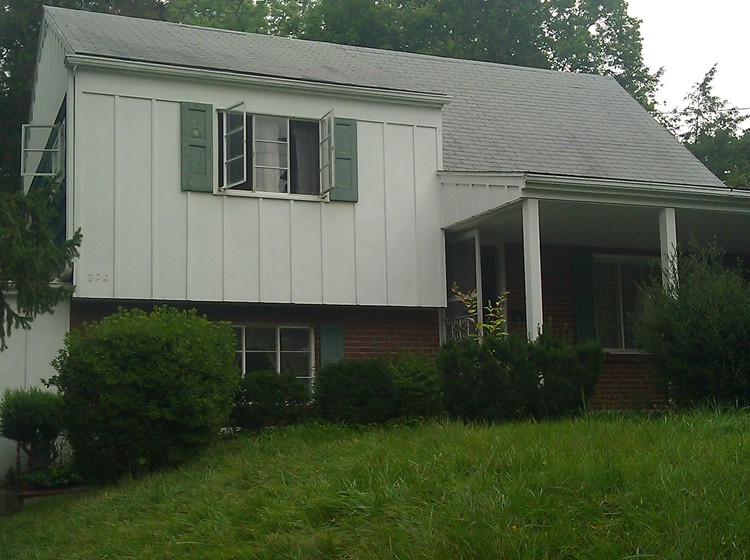
The agreement of sale that follows further identifies the property as 892 Old Lancaster Avenue, the seller as the Estate of Arthur Fennimore, and the price as $265K. The date of sale is left blank. On Saturday morning, I stopped by the property to take a photo and spoke with the grandson of Mr. Fennimore. He and his brothers were cleaning out the house in advance of the purchase by TESD. Mr. Fennimore was 97 when he passed away and was the original owner of the house. According to the grandson, closing between the Estate and TESD is expected by the end of the week.

I have attended most, if not all, of the 2012 School Board meetings and have absolutely no recall on the discussion to purchase additional real estate property, … especially given the agonizing budget decisions, the possibility of demotion and the contract negotiations with the teachers. Therefore, I don’t think that I missed the discussion about purchasing additional real estate.

This past Friday there was a Facilities Committee meeting and although I did not attend, according to the agenda there was no discussion about the upcoming purchase of the Fennimore property. To be clear, in the past, there have been on/off discussions about the maintenance building and the need to expand the storage facility. In fact, there are existing architectural plans — but as far as I knew, the project was ‘on hold’ for obvious economic reasons.

The Fennimore house is the last remaining property between the current maintenance building and T/E Middle School on Old Lancaster Rd. – the District previously purchased all other properties. So … I guess from an overall planning standpoint, the acquisition of this property makes sense. However, given the District’s current economic climate and the unsettled teachers’ contract, it would seem that the topic to ‘purchase’ would still require some discussion, not just buried with 20 other consent items. Unfortunately, the word that immediately comes to mind … transparency, or rather ‘lack thereof’.

Based on my conversation with Mr. Fennimore’s grandson, the estate has a deal with the school district and that closing and settlement will occur later this week. Given that there appears that there will be no discussion about the School Board’s decision to purchase the property, here are my questions …

How did they arrive at the price for the property? The sale price is listed as $265K. My friend Ray Clarke did the research and determined that the assessed value is $129,500. According to Ray, if we “… multiply $129,500 by the current Chester County Common Level Ratio of 1.70, you get $220,150.” Subtract $220,150 from $265K, and you have to ask, why is the School District paying a $45K premium for this property. Regardless of future development plans, for the time being, the District will need to tear down the house, which means an additional expense. Another question — is the maintenance-storage facility project still on the back burner or does the Fennimore house purchase have the timetable moved up on the construction project?

Some may suggest that a $265K real estate purchase in the T/E School District is a ‘bargain’ and a ‘smart’ move for the District in these depressed economic times. But the bottom line for me, is $265K really such a bargain for a property assessed at $130K? And what about the public – do we deserve an explanation about the purchase? What is the plan for the acquisition? And if there is a plan, how much will that plan cost?

I have the questions, but it doesn’t look like there will be much in the way of answers.

T/E School Board: 2nd Vote Not to Accept Fact Finders Report

Last night was both the Board of Supervisors meeting and the special meeting of the school district. I attended the BOS meeting and Ray Clarke attended the TESD meeting and kindly provided his personal notes of the meeting. Although we should not be surprised that the school board rejected the fact finders report a second time, in speaking with Ray I am troubled by something that happened. Now again — I was not there so if my interpretation is incorrect, someone please correct me.

It appears that there was a heated exchange between Sultanik (the negotiating attorney hired by TESD) and Laura Whittaker, the teacher union president. Apparently it is OK for Sultanik to make public claims against the union but Ms. Whittaker is not allowed to defend her position. Why? Because although Ms. Whittaker is a TESD teacher, she is not a T/E resident. Regardless of which side you support (TESD or TEEA) this does not seem fair.

I understand the economics of the school district, but that does not give Sultanik the right to disrespect the teachers and then offer no option for them to defend. These people teach our children, are they not entitled to respect? The school board has a policy that non-T/E residents are not permitted to comment at school board meetings and I appreciate that if there is long line of people waiting to comment, that it is fair that residents be permitted to speak first. Regardless of the union, TENIG, TEEA, etc. I am of the opinion that the union president representing his/her members should be permitted to speak at school board meetings, without a ‘residency’ requirement. I am not saying all the non-resident teachers, custodians, etc. just the presidents, should they be non-residents.

Again, I did not attend the meeting and would certainly appreciate the opinions of other who did attend. Bottom line for me … I want both sides fairly represented but I don’t like the idea of public ‘dressing-down’ from either. Here are Ray’s notes:

The School Board took advantage of the forum offered by tonight’s Board meeting to present their side of the contract negotiations and to outline the details of their three year offer suggested at the last Board meeting. Unfortunately, perhaps, they felt the need to rebut the TEEA week-end comment that “School board members have not met with us….” with Mr Sultanik recounting a minute by minute list of the emails between him and the union’s Ms Waldie, during which an offer to meet was repeatedly made, and which did in fact lead to a meeting of the parties on August 15th. At that meeting the Board presented their proposal, to which – according to Sultanik – the TEEA has not officially responded. There were shouts of “You lie!” or similar from the audience, but Ms Whittaker, not a district resident, was not permitted to speak.

Here’s the essence of the District proposal:

– Freeze matrix, step and column positions for 2 years. One step and column movement halfway through Year 3

– One time $2,500 bonus for all teachers in Year 2 and one time $1,000 bonus for all teachers on the top step in Year 3

— Sizable incentives that do not build in recurring expense (use of the fund balance!)

– 189 day calendar in Years 2 and 3, down from the current 191 days

— Locking in the 2 furlough days (1% salary reduction) in the Fact Finder report

– Two health plans with family coverage with premium share rising from 9-10% to 11-12% in Year 3. The individual dollar cost for the most expensive plan is projected at $1,743 to $2,531, compared to $1,020 under the current plan. A $50,000-$60,000 copay pool in Years 2 and 3 if the higher cost healthcare plan can be dropped due to less than half the employees selecting that plan.

The national average for premium share is 29%

— There’s a tax provision that allows employees to deduct their premium share, reducing the net cost by their marginal tax rate

– A cap on tuition reimbursement of $150,000 in Years 2 and 3 (compared to $290,000 under the current MOU and $650,000 last year)

– Radnor and Lower Merion have introduced caps on tuition reimbursement

– Prescription copays as in the Fact Finder report

– Demotions allowed for economic reasons in Years 2 and 3

– Settlement of outstanding grievances, particularly re the CHS 6 period day

— If ruled in favor of the union would require the hiring of 12 additional FTE at a cost of $1.2 million a year

Sultanik stated that the deadline for a TEEA response is August 27th at 12 noon. It’s not clear if that is a mandatory deadline per the law, but it could be, since the process is still under the aegis of the state arbitrator and law does require continuation of the negotiating process.

Art McDonnell presented two slides that provided the current status quo budget/3 year projection and the Fact Finder report. As presented, the Fact Finder report reduced the Year 1 and 2 deficits by about $300,000, but the year 3 (and 4) deficits increased by the same amount. He did not show how the latest Board proposal would stack up under the same model, but in response to my question there were general comments from the Board that the deficits would still not be eliminated under likely tax scenarios. (I think that there may be enough data to model the impact ourselves, and with some time over the next couple of days I’ll take a shot at that, but it will be difficult to account for all the inter-relations of salary, PSERS, etc.)

Ann Crowley and Kris Graham explained their August 9th votes to accept the Fact Finder report largely on the basis of expediency and on the intangible impact of an unsettled contract on home values, teacher stress, need for students to continue to out-perform, and so on. Mrs Graham thought there was now benefit to the teachers to get the 3 year deal and so changed her vote tonight, in order to get the parties back to the negotiating table. Mrs Crowley abstained from voting in protest of the email litany recounted by Mr Sultanik. Dr Motel reminded the audience that salaries for all other employees have been flat for three years, and at some point increases may need to be found. President Cruickshank also noted this and the give backs from TENIG employees and separately custodians. She noted that the Board has to balance the budget and recounted the last three years total of $10 million expense cuts, maximum tax increases and falling real estate assessments. Remaining options are to cut kindergarten, transportation and extra-curriculars. She made a plea for “two austere years to right the financial ship”.

The Board voted 8 to 0 with one abstention to reject the Fact Finder report.

The audience seemed to be largely teachers, with little public comment. Andrea advocated rationalizing the healthcare benefit craziness by providing a defined contribution rather than a Blue Cross-specific defined benefit; another resident supported the Fact Finder report on the basis of retaining qualified teachers and supporting property prices. ABC News was there, also.

Community Matters © 2025 Frontier Theme